
Dagstuhl Seminar 26181
Computational Metabolomics: Discovery of New Molecules to Actionable Insights
( Apr 26 – Apr 30, 2026 )
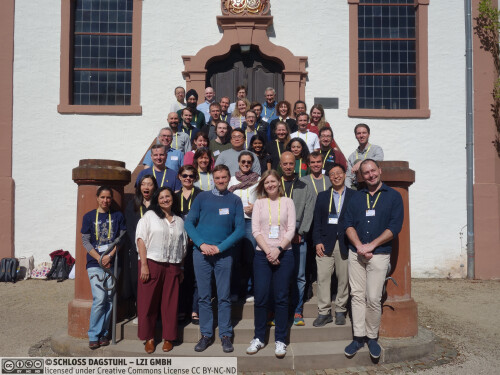
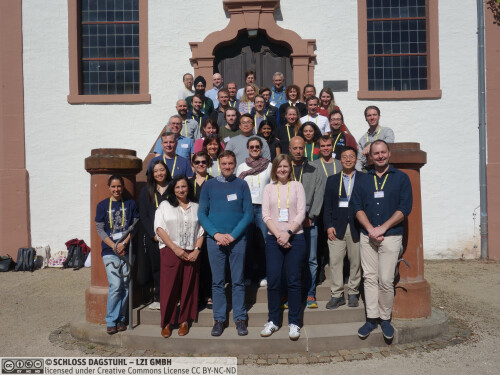

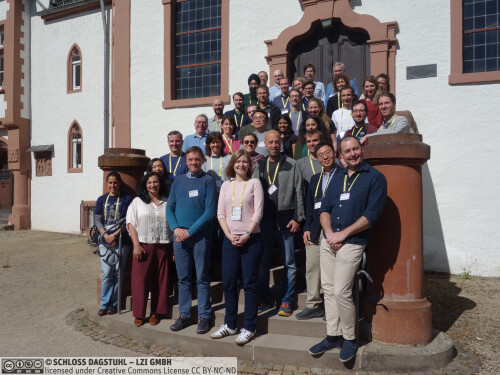
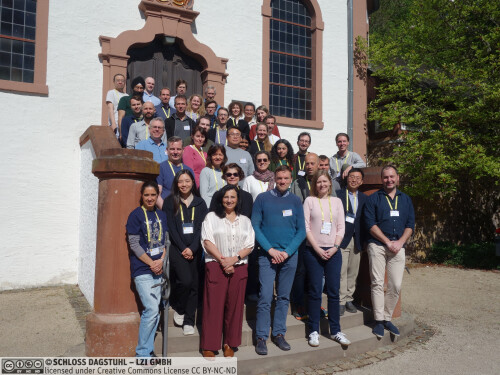

(Click in the middle of the image to enlarge)
Permalink
Please use the following short url to reference this page:
https://www.dagstuhl.de/26181
Organizers
- Soha Hassoun (Tufts University - Medford, US)
- Tomas Pluskal (IOCB - Prague, CZ)
- Stacey N. Reinke (Edith Cowan University - Joondalup, AU)
- Justin J. J. van der Hooft (Wageningen University, NL)
Contact
- Andreas Dolzmann (for scientific matters)
- Susanne Bach-Bernhard (for administrative matters)
Shared Documents
- Dagstuhl Materials Page (Use personal credentials as created in DOOR to log in)
Schedule
Metabolomics involves the comprehensive analysis of small molecules within a biological sample. Typically acquired using mass spectrometry, metabolomics data reflect the cellular state which can provide insights into health, disease, environmental toxicity, industrial technology, and other areas. Metabolomics data is rich and complex, requiring specialized techniques to interpret the data. With improved detection technologies and advances in machine learning and generative AI, computational analysis of metabolomics is rapidly expanding. This Dagstuhl Seminar extends the Computational Metabolomics series by focusing on enhancing our understanding of metabolomics data and turning the data into actionable biological insights.
During this seminar, we aim to discuss topics related to several current challenges in metabolomics. A key challenge lies in interpreting complex, high-dimensional spectral data, which is often affected by noise and artifacts that obscure true biological signals. The structural diversity of metabolites further complicates annotation, as mass spectrometry – even with tandem MS – can yield ambiguous results due to the vast number of possible molecular structures, many of which may be undocumented in existing databases. Adding biological context can aid interpretation, but this is limited by the incomplete understanding of metabolic pathways and reaction networks. Additionally, the lack of standardization in data collection, processing, and reporting hinders reproducibility, cross-study comparison, and integration with other omics datasets.
In light of these challenges, we plan on discussing topics related to three themes: i) Discovery of new molecules, ii) Data to actionable insights, and iii) Cross-cutting enabling technologies. Key topics we foresee include optimizing data-acquisition methods to improve the data quality, leveraging machine learning and de novo annotation tools for structure prediction, and advancing computational chemistry to predict molecular fragmentation. Additionally, this seminar will explore the integration of metabolomics with other omics data and clinical records to drive systems biology and metabolomic epidemiology. Cross-cutting technologies such as data repositories and generative AI, with applications in de novo molecular generation and experiment optimization, will also be highlighted. Through discussions on education and training, the seminar will also provide frameworks to ensure the metabolomics community can meet the computational demands of this rapidly evolving field.
This seminar expands the scope of previous seminars in the Computational Metabolomics series to reflect the growing field of computational metabolomics. As we have included several newer relevant topics, such as computational chemistry, chemoinformatics, and generative AI, we will invite a diverse set of scientists with the pertinent expertise. As outcomes, we anticipate new collaborations, grant applications, software techniques, updated and potentially new benchmarking datasets, training and educational material, and joint collaborative papers.
 Creative Commons BY 4.0
 Soha Hassoun, Tomas Pluskal, Stacey N. Reinke, and Justin J. J. van der Hooft
Please log in to DOOR to see more details.
- Wout Bittremieux (University of Antwerp, BE) [dblp]
- Rónán Daly (University of Glasgow, GB) [dblp]
- Pieter Dorrestein (University of California - San Diego, US) [dblp]
- Timothy M. D. Ebbels (Imperial College London, GB) [dblp]
- Natasa Giallourou (Metabolon Inc. - Cyprus, CY)
- Yoann Gloaguen (ELVT Labs - Berlin, DE)
- Gerard Bryan Gonzales (Ghent University, BE)
- Soha Hassoun (Tufts University - Medford, US) [dblp]
- Carolin Huber (Eawag - Dübendorf, CH) [dblp]
- Florian Huber (Hochschule Düsseldorf, DE)
- Filip Jozefov (IOCB - Prague, CZ)
- Kyo Bin Kang (Sookmyung Women's University - Seoul, KR) [dblp]
- Gabi Kastenmüller (Helmholtz Zentrum München, DE) [dblp]
- Nikolas Kessler (Bruker Daltonics - Bremen, DE)
- Tobias Kind (Enveda - Boulder, US) [dblp]
- Jennifer Kirwan (Vetmeduni - Wien, AT) [dblp]
- Fleming Kretschmer (Friedrich-Schiller-Universität Jena, DE) [dblp]
- Mrunali Manjrekar (MIT - Cambridge, US) [dblp]
- Ewy A. Mathé (National Institutes of Health - Bethesda, US) [dblp]
- Sajjan Singh Mehta (oloBion - Barcelona, ES) [dblp]
- Louis-Felix Nothias (CNRS & Université Côte d'Azur - Nice, FR) [dblp]
- Tomas Pluskal (IOCB - Prague, CZ) [dblp]
- Stacey N. Reinke (Edith Cowan University - Joondalup, AU)
- Hannes Röst (University of Toronto, CA) [dblp]
- Adriano Rutz (ETH Zürich, CH) [dblp]
- Robin Schmid (The Czech Academy of Sciences - Prague, CZ)
- Emma Schymanski (University of Luxembourg, LU) [dblp]
- Michael Skinnider (Princeton University, US) [dblp]
- Denise Slenter (Maastricht University, NL) [dblp]
- Michael Strobel (University of California - Riverside, US) [dblp]
- Verena Taudte (Universität Marburg, DE)
- Ralf Tautenhahn (Thermo Fisher Scientific - San José, US) [dblp]
- Rosina Torres Ortega (Wageningen University, NL) [dblp]
- Justin J. J. van der Hooft (Wageningen University, NL) [dblp]
- Joe Wandy (University of Glasgow, GB) [dblp]
- Fei Wang (University of Alberta - Edmonton, CA)
- Oscar Yanes (Rovira i Virgili University - Reus, ES) [dblp]
- Krista Zanetti (National Institutes of Health - Bethesda, US)
- Yan Zhou Chen (Tufts University - Medford, US) [dblp]
Related Seminars
- Dagstuhl Seminar 15492: Computational Metabolomics (2015-11-29 - 2015-12-04) (Details)
- Dagstuhl Seminar 17491: Computational Metabolomics: Identification, Interpretation, Imaging (2017-12-03 - 2017-12-08) (Details)
- Dagstuhl Seminar 20051: Computational Metabolomics: From Cheminformatics to Machine Learning (2020-01-26 - 2020-01-31) (Details)
- Dagstuhl Seminar 22181: Computational Metabolomics: From Spectra to Knowledge (2022-05-01 - 2022-05-06) (Details)
- Dagstuhl Seminar 24181: Computational Metabolomics: Towards Molecules, Models, and their Meaning (2024-04-28 - 2024-05-03) (Details)
Classification
- Artificial Intelligence
- Databases
- Machine Learning
Keywords
- Computational metabolomics
- computational mass spectrometry
- bioinformatics
- cheminformatics
- machine learning
- generative AI
- multi-omics integration
- metabolite annotation
- chemoinformatics