
Dagstuhl Seminar 25232
Navigating the Maze of Guidelines to Unify Visualization Design Recommendations
( Jun 01 – Jun 06, 2025 )
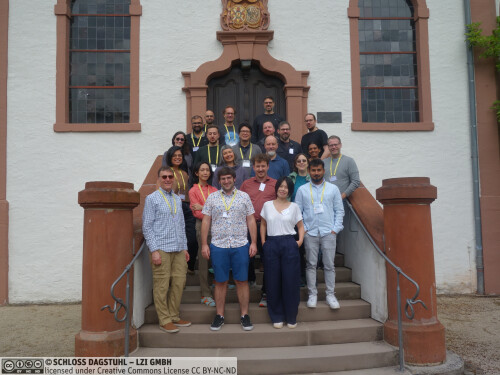
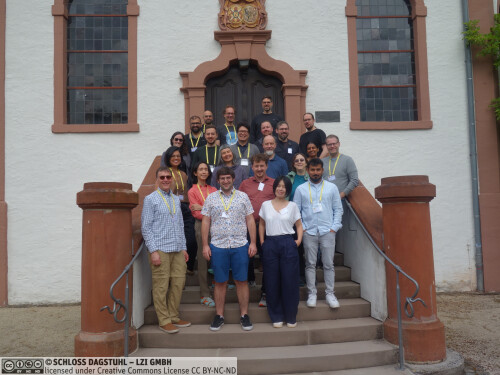
(Click in the middle of the image to enlarge)
Permalink
Please use the following short url to reference this page:
https://www.dagstuhl.de/25232
Organizers
- Evanthia Dimara (Utrecht University, NL)
- Miriah Meyer (Linköping University, SE)
- Ghulam Jilani Quadri (University of Oklahoma - Norman, US)
- Paul Rosen (University of Utah - Salt Lake City, US)
Contact
- Marsha Kleinbauer (for scientific matters)
- Jutka Gasiorowski (for administrative matters)
Schedule
The field of visualization suffers from several interrelated challenges around design guidelines. First, we generate many loosely connected artifacts–theoretical frameworks, controlled experiments, qualitative studies, design studies, and practitioner expertise, etc. Second, there are challenges with generalization and the synthesis of research with little to no common framework that connects them (i.e., there is no good “theory of visualization”). Third, the artifacts we produce are hard to access – we produce many difficult-to-read papers, not to mention issues of education and literacy, communication and misinformation, role in decision making, etc.
At this seminar, we explored these challenges through the question: How do we formulate and integrate the knowledge we produce to best serve the visualization community and the world broadly?
The seminar started with lightning talks from all participants. The participants chose from a variety of provocations provided by the organizers to guide their talk content. The provocations were:
- “Are Guidelines Just Bullsh*t?” What if the guidelines we cling to are nothing more than overgeneralized, useless lab artifacts?
- “Shall Our AI Overlords Just Gobble Up Your Guidelines?” With AI generating visualizations autonomously, where do human-centered design principles fit in – or do they at all?
- “Born in the Lab, Broken in the Wild?” Do our visualization guidelines reflect real-world needs, or just controlled experiments?
- “Guidelines or Guardrails?” Are design guidelines empowering creativity, or are they limiting innovation with false certainty?
- “Is Visualization a Science or a Craft?” If we treat vis as a scientific discipline, can we really generalize design? Or are we ignoring its artistic and contextual roots?
- “Implications ≠ Instructions” Why do we keep mistaking exploratory study findings for universal design truths?
- “Generalization Is a Comfort, Not a Guarantee” In our rush to codify design, are we sacrificing nuance and context for the illusion of control?
- "Whose guidelines are these anyway?” Cognitive efficiency and perceptual accuracy underlie most visualization guidelines – is this all that we are about?
During the lightning talks, participants were encouraged to record ideas and thoughts on post-it notes, which the organizers used to create a set of themes for possible working groups. The entire group discussed the themes and agreed on the following ideas for working groups:
- AI + guidelines
- Characterizing guidelines
- Values + Teaching
- Goals for effective guidance
Working groups were encouraged to develop a zine by the end of the seminar to capture and communicate their main ideas. Three of the four groups produced zines; the fourth group created a short report document. One working group produced a panel proposal for the main visualization conference (IEEE VIS) as part of their working group. This panel was accepted and successfully run at the conference in November 2025.
To support cross-talk during the week, we had a mixer activity that took alternative themes for the seminar and had participants create a playlist of ideas for that theme. This activity resulted in new ideas feeding back into the existing working groups that broadened the scope of conversations.
The seminar resulted in a range of ideas, from concrete formulations of what exactly a guideline is and what makes it effective, to speculative ideas about the uses of generative AI for working with guidelines, and more far-reaching ideas about what values guidelines imply and what that says about the field of visualization more holistically.
 Creative Commons BY 4.0
 Paul Rosen, Miriah Meyer, and Ghulam Jilani Quadri
In an era characterized by an unprecedented volume of data, designing visualizations requires effectively representing complex data in a manner that is both interpretable and meaningful to users while ensuring that visual encodings are accurate, clear, and free from potential biases or misrepresentations. Designers must further consider users' diverse cognitive and perceptual abilities and the context in which visualizations are displayed. Creating such designs requires significant insights into a broad range of knowledge from diverse sources, including the theoretical foundations of visualization, empirical (e.g., perceptual/cognitive) studies, design studies, applications, and others. However, as a community, we are inundated with a fragmented knowledge of how to optimally design visualizations, leading all of us, especially those who do not regularly read visualization research, to rely heavily on intuition.
There is an urgent need for methodical, evidence-based guidance to inform the creation of effective and engaging data visualizations. Best practices, namely design guidelines and recommendations, hold a significant role. They serve as invaluable resources for designers, educators, communicators, and decision-makers, offering a structured framework to optimize data communication, informed decision-making, and the mitigation of misinformation's spread. However, best practices alone are an incomplete solution.
The challenge within this research area is the vast and complex design space, encompassing various chart types, color schemes, interaction techniques, layout choices, and many others. The sheer diversity of possibilities makes it challenging to distill comprehensive guidelines capable of covering every conceivable scenario. To make matters worse, research papers in this domain are frequently difficult to generalize and synthesize into existing knowledge. The contextual and domain-specific nature of the studies introduces significant hurdles when attempting to consolidate diverse research findings into a unified set of actionable principles. What proves effective for one type of visualization may not necessarily apply in other contexts, leading to potential disparities among research outcomes. The challenge is so widespread that it intersects with four out of six topical areas for research papers at IEEE VIS: Theoretical & Empirical, Applications, Representations & Interaction, and Analytics & Decisions.
In this Dagstuhl Seminar, we will address this challenge by discussing the sources of guidelines and recommendations (e.g., theoretical frameworks, controlled experiments, qualitative studies, design studies, and practitioners expertise), how to integrate guidelines and recommendations into systems and designs (e.g., challenges with generalization and the synthesis of research), and the utility of guidelines and recommendations (e.g., issues of education and literacy, communication and misinformation, role in decision making, and how to automatically apply recommendations). Our goal is to explore the challenging problem of converging this foundational knowledge, design recommendations, and best practices into technical, sociotechnical, and theoretical frameworks that provide actionable insights that serve the practical needs of both the visualization community and the broader public and propose a course of action for the visualization community to address the problem more directly.
Evanthia Dimara, Miriah Meyer, Ghulam Jilani Quadri, and Paul Rosen
- Bon Adriel Aseniero (AUTODESK - Toronto, CA) [dblp]
- Michael Aupetit (HBKU - Doha, QA) [dblp]
- Cindy Xiong Bearfield (Georgia Institute of Technology - Atlanta, US) [dblp]
- Fabian Beck (Universität Bamberg, DE) [dblp]
- Alexander Bock (Linköping University, SE) [dblp]
- Angelos Chatzimparmpas (Utrecht University, NL) [dblp]
- Michael Gleicher (University of Wisconsin-Madison, US) [dblp]
- Lane T Harrison (Worcester Polytechnic Institute, US) [dblp]
- Petra Isenberg (INRIA Saclay - Orsay, FR) [dblp]
- Alex Kale (University of Chicago, US) [dblp]
- Sungahn Ko (POSTECH - Pohang, KR) [dblp]
- Kuno Kurzhals (Universität Stuttgart, DE) [dblp]
- Miriah Meyer (Linköping University, SE) [dblp]
- Carolina Nobre (University of Toronto, CA) [dblp]
- Ghulam Jilani Quadri (University of Oklahoma - Norman, US) [dblp]
- Paul Rosen (University of Utah - Salt Lake City, US) [dblp]
- Arvind Satyanarayan (MIT - Cambridge, US) [dblp]
- Karen Schloss (University of Wisconsin - Madison, US) [dblp]
- Michael Sedlmair (Universität Stuttgart, DE) [dblp]
- Vidya Setlur (Tableau Research - Palo Alto, US) [dblp]
- Cagatay Turkay (University of Warwick - Coventry, GB) [dblp]
- Tatiana von Landesberger (Universität Köln, DE) [dblp]
- Daniel Weiskopf (Universität Stuttgart, DE) [dblp]
Classification
- Graphics
- Human-Computer Interaction
Keywords
- Visualization design
- Visualization recommendations
- Qualitative evaluation
- Design studies
- Visualization system and generative AI