Dagstuhl Seminar 25452
A Roadmap Towards Practical Applications of Neurosymbolic Learning and Reasoning
( Nov 02 – Nov 07, 2025 )
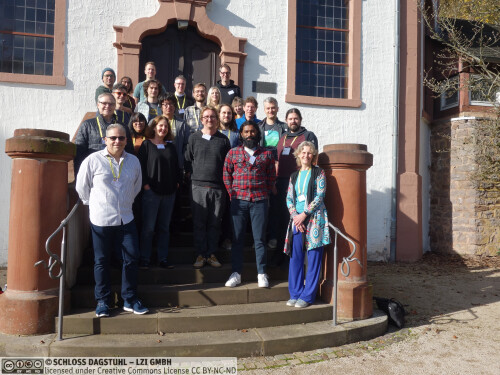
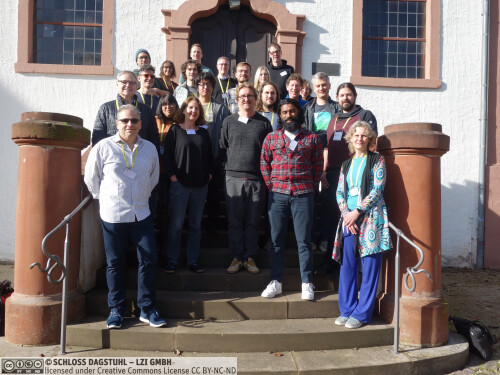
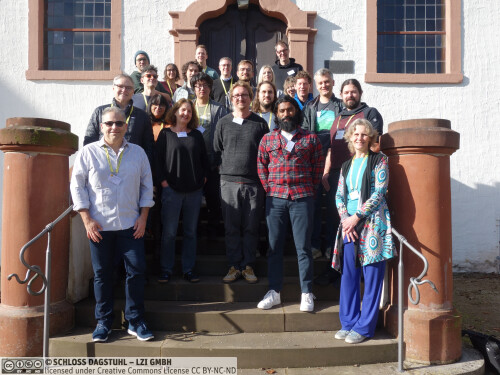
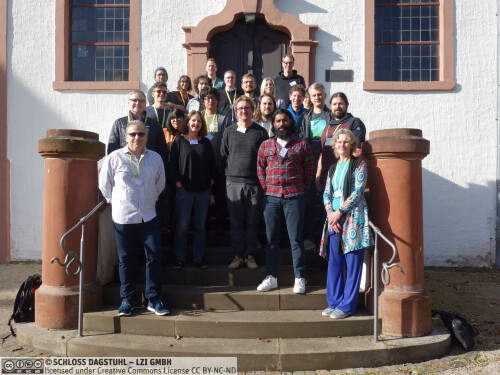
(Click in the middle of the image to enlarge)
Permalink
Please use the following short url to reference this page:
https://www.dagstuhl.de/25452
Organizers
- Tarek Richard Besold (Sony AI - Barcelona, ES)
- Leilani H. Gilpin (University of California - Santa Cruz, US)
- Kristian Kersting (TU Darmstadt, DE)
- Annette ten Teije (VU Amsterdam, NL)
- Thiviyan Thanapalasingam (University of Amsterdam, NL)
Contact
- Michael Gerke (for scientific matters)
- Christina Schwarz (for administrative matters)
Shared Documents
- Dagstuhl Materials Page (Use personal credentials as created in DOOR to log in)
Schedule
This summary presents the outcomes of our Dagstuhl Seminar on “A Roadmap Towards Practical Applications of Neurosymbolic Learning and Reasoning” (25452). The seminar brought together 23 researchers from diverse fields to address the critical challenge of transitioning Neurosymbolic AI (NeSy) systems from synthetic benchmarks to real-world applications. The seminar focused on:
- Identifying key challenges that impede the practical deployment of NeSy systems,
- Developing concrete action plans and collaborative structures to address these challenges,
- Establishing deliverables including educational resources, open-source libraries, and an article in a high-impact journal.
As a result of the seminar, the following challenges have been identified and addressed through structured discussions and working groups:
- Benchmarks and Evaluation: The field's current reliance on synthetic problems (e.g., MNIST Addition, MNIST Sudoku) fails to capture real-world complexity. Participants developed plans for creating realistic benchmark suites that incorporate incomplete rule sets, scalability requirements, and standardized evaluation metrics beyond traditional machine learning measures, including reasoning correctness, rule violation detection, and interpretability assessment.
- Domain Applications: Three priority application areas were identified (robotics, natural sciences, and healthcare) where NeSy systems can provide substantial value. Working groups outlined concrete use cases while identifying specific technical challenges and highlighting existing applications of NeSy systems from other AI subfields.
- Open-Source Infrastructure: Following the success of tools like PyTorch Geometric in accelerating deep learning adoption, participants discussed with the creators of Pylon and ULLER strategies to lower entry barriers for both researchers and practitioners.
- Educational Resources: To broaden participation and accelerate field growth, participants committed to writing a comprehensive handbook/textbook on NeSy foundations, using machine learning as a foundation, and targeting graduate students and researchers from adjacent fields.
The seminar produced several concrete outcomes and commitments for future collaboration. Participants agreed to co-author a CACM article to raise awareness across the broader scientific community, initiate development of open-source Python libraries for NeSy methods, create a comprehensive benchmark suite with standardized evaluation protocols, and update the Wikipedia entry for Neurosymbolic AI to improve public-facing documentation of the field.
Plenary discussions on “What would be a good textbook for teaching Neurosymbolic Learning and Reasoning?” and “What is the role of Neurosymbolic AI in the era of foundational models?” produced important insights regarding how large language models both motivate NeSy research by highlighting reasoning limitations and provide new opportunities through neuro-symbolic integration with foundation models.
The seminar’s roadmap positions the NeSy community to address pressing challenges in AI by focusing on practical applications and building supporting infrastructure.
 Creative Commons BY 4.0
 Thiviyan Thanapalasingam, Annette ten Teije, and Frank van Harmelen
Motivation
The field of Neurosymbolic Artificial Intelligence (NeSy) promises to combine the scalability and adaptability of neural networks with the precision and interpretability of logic-based reasoning systems. Despite significant research progress, the development of NeSy systems that seamlessly integrate symbolic and sub-symbolic elements at scale for real-world practical applications remains an open challenge. Current NeSy research largely focuses on synthetic problems with complete rule sets in controlled environments, making assumptions that often don't hold in real-world scenarios.
As large language models and pure deep learning approaches continue to advance, we must ask: what unique value can neurosymbolic approaches offer? This Dagstuhl Seminar challenges the belief that scaling alone is sufficient for AI advancement and argues that systematic integration of symbolic and sub-symbolic methods is essential for building more capable, interpretable, and reliable AI systems that align with realworld application needs in critical domains.
The seminar aims to bring together researchers and practitioners from diverse backgrounds – including those working in robotics, healthcare, natural sciences, machine learning, and knowledge representation – to develop a concrete action plan for advancing practical Neurosymbolic AI applications over the next three to five years.
Key Challenges to Address
We have identified several key challenges that currently limit the practical adoption of NeSy systems. These include creating more realistic benchmarks and standardized evaluation metrics to better capture reasoning capabilities; identifying specific use cases in robotics, natural sciences, and healthcare where NeSy methods can deliver unique value; developing accessible open-source frameworks and tools to reduce entry barriers; creating user-friendly knowledge acquisition tools for domain experts who lack technical AI backgrounds or NeSy expertise; and developing educational resources to make NeSy principles more approachable for newcomers. The seminar welcomes discussion on these challenges as well as additional ones identified by participants, with the goal of collaboratively developing a roadmap that addresses the most pressing barriers to practical adoption.
Expected Outcomes
The seminar aims to produce several concrete outputs: a position paper outlining the roadmap for practical NeSy applications; plans for open-source libraries and tools; strategies for developing improved benchmarks; and potential collaborative funding proposals. By facilitating cross-domain collaboration between symbolic AI experts, deep learning researchers, and domain specialists, we aim to overcome the current gap between theoretical NeSy research and practical applications.
This timely seminar comes as the AI community increasingly recognizes the limitations of pure deep learning methods and seeks more robust, interpretable alternatives, particularly for safety-critical applications. Through structured discussions and collaborative breakout sessions, participants are expected to chart a path forward that leverages the complementary strengths of neural and symbolic approaches to address real-world challenges.
Tarek Richard Besold, Leilani H. Gilpin, Kristian Kersting, Annette ten Teije, and Thiviyan Thanapalasingam
Please log in to DOOR to see more details.
- Agnese Chiatti (Polytechnic University of Milan, IT) [dblp]
- Michael Cochez (VU Amsterdam, NL) [dblp]
- Byron Cook (Amazon - New York, US & DARPA - Arlington, US & UCL, GB) [dblp]
- Cristina Cornelio (Samsung AI - Cambridge, GB) [dblp]
- Artur d'Avila Garcez (City - University of London, GB) [dblp]
- Sebastijan Dumancic (TU Delft, NL) [dblp]
- Egor Kostylev (University of Oslo, NO) [dblp]
- Luis C. Lamb (CatholicTech - Bellevue, US) [dblp]
- Robin Manhaeve (KU Leuven, BE) [dblp]
- Lia Morra (Polytechnic University of Turin, IT) [dblp]
- Mathias Niepert (Universität Stuttgart, DE) [dblp]
- Robert Peharz (TU Graz, AT) [dblp]
- Ute Schmid (Universität Bamberg, DE) [dblp]
- Alberto Speranzon (Lockheed Martin - Eagan, US) [dblp]
- Maarten Stol (BrainCreators - Amsterdam, NL) [dblp]
- Annette ten Teije (VU Amsterdam, NL) [dblp]
- Thiviyan Thanapalasingam (University of Amsterdam, NL) [dblp]
- Guy Van den Broeck (UCLA, US) [dblp]
- Frank van Harmelen (VU Amsterdam, NL) [dblp]
- Emile van Krieken (University of Edinburgh, GB) [dblp]
- Antonio Vergari (University of Edinburgh, GB) [dblp]
- Maria-Esther Vidal (TIB - Hannover, DE) [dblp]
- Benjie Wang (UCLA, US)
Classification
- Artificial Intelligence
- Logic in Computer Science
- Symbolic Computation
Keywords
- Neurosymbolic Artificial Intelligence
- Symbolic and Sub-symbolic Integration
- Deep Learning
- Logical Reasoning
- Knowledge Representation and Reasoning