
Dagstuhl Seminar 25451
Bayesian Optimisation
( Nov 02 – Nov 07, 2025 )
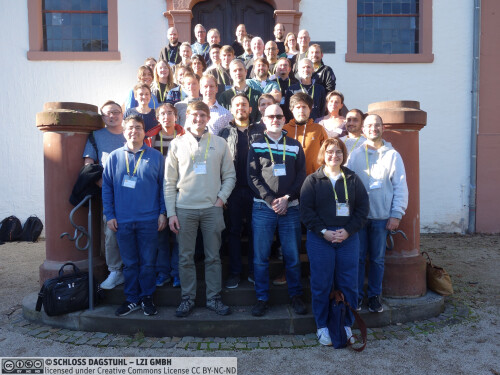
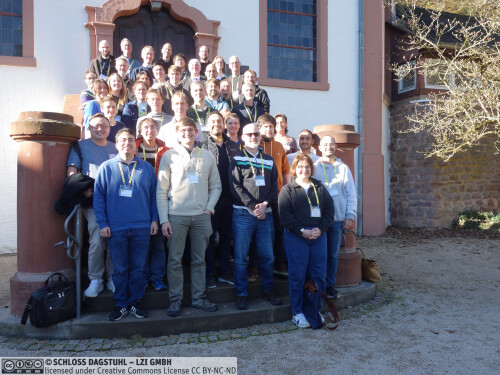
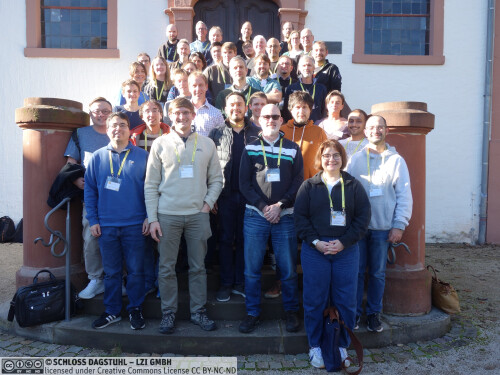
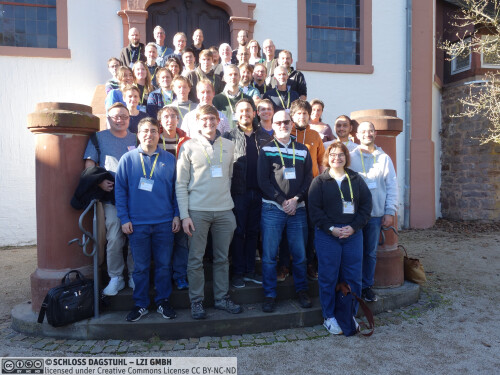
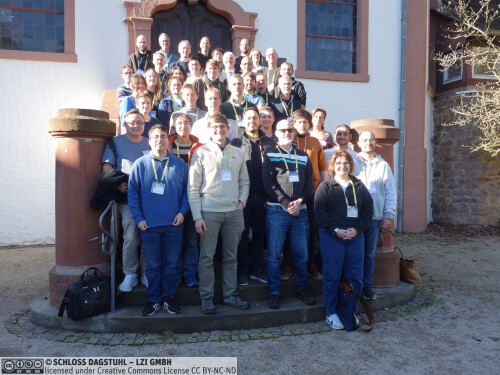
(Click in the middle of the image to enlarge)
Permalink
Please use the following short url to reference this page:
https://www.dagstuhl.de/25451
Organizers
- Jürgen Branke (University of Warwick, GB)
- Frank Hutter (Prior Labs - Freiburg, DE & ELLIS Institute Tübingen, DE & Universität Freiburg, DE)
- Giulia Pedrielli (Arizona State University - Tempe, US)
- Matthias Poloczek (Amazon.com - San Francisco, US)
Contact
- Andreas Dolzmann (for scientific matters)
- Christina Schwarz (for administrative matters)
Shared Documents
- Dagstuhl Materials Page (Use personal credentials as created in DOOR to log in)
Schedule
The Dagstuhl Seminar “Bayesian Optimisation” (November 2–7, 2025) brought together 39 leading researchers from 11 countries to discuss the state of the art, emerging challenges, and future directions of Bayesian optimisation (BO). BO is a core methodology for optimizing expensive black-box functions and lies at the intersection of machine learning, optimisation, and statistics, with strong contributions from engineering and applied sciences. It combines probabilistic surrogate modelling with principled decision-making to determine which evaluations are most informative under limited budgets.
Although foundational ideas in Bayesian optimisation date back to the 1950s, the field has experienced rapid growth only since around 2010, driven by advances in Gaussian process modelling, computational power, and high-impact applications such as hyperparameter tuning of machine learning methods, simulation-based optimisation, and experimental design. Despite this momentum, BO remains a fragmented research area: there is no dedicated flagship conference, and researchers are dispersed across multiple communities with differing assumptions, evaluation practices, and terminologies. A central aim of the seminar was therefore community building – bringing together researchers from machine learning, operations research, statistics, and engineering to develop a shared understanding of challenges, benchmarks, and research priorities.
The seminar programme featured 12 plenary talks designed to stimulate discussion across subfields, covering topics ranging from the historical development of BO and benchmarking practices to recent advances in high-dimensional optimisation, human-in-the-loop methods, and the integration of large language models and generative AI. In addition, participants worked in five focused working groups on themes identified as critical for the community: human-in-the-loop Bayesian optimisation; multi-fidelity Bayesian optimisation; acquisition strategies; surrogate modelling; and the intersection of Bayesian optimisation with generative AI. The outcomes of these discussions, together with abstracts of the plenary talks, are documented in this report.
Beyond structured discussions, the seminar also facilitated the exchange of practical insights. Participants jointly compiled a collection of “tricks of the trade” reflecting practical wisdom that is often absent from the formal literature. In addition, attendees were invited to apply their preferred BO tools to a small set of benchmark problems, providing a concrete basis for discussions on benchmarking, software libraries, and best practices. Summaries of these activities are also included in the report.
Schloss Dagstuhl once again proved to be an ideal environment for intensive scientific exchange and community formation. Both organisers and participants regarded the seminar as a significant success. Recognising the importance of sustained interaction for this rapidly evolving field, the participants established a Steering Group tasked with coordinating future meetings and related community-building activities. This seminar thus represents not only a snapshot of current research in Bayesian optimisation, but also a foundation for a more cohesive and collaborative BO community going forward.
 Creative Commons BY 4.0
 Jürgen Branke, Frank Hutter, Giulia Pedrielli, and Matthias Poloczek
Bayesian optimisation is one of the great successes of Machine Learning, offering a powerful tool for optimising complex, expensive, and otherwise often intractable black-box problems. It has been widely adopted across various industries, from engineering applications like automated design of new materials and advanced manufacturing systems to complex control decisions in embedded systems. Bayesian optimisation has also become a cornerstone of AutoML (Automated Machine Learning), particularly in hyperparameter tuning for large-scale deep learning and reinforcement learning models. Finally, it is gaining traction in emerging fields such as synthetic biology and biomanufacturing, where it plays a critical role in both product design and process control.
Research in Bayesian optimisation spans multiple domains, including Machine Learning, Statistics, Engineering, and Operational Research. This makes it a multi-disciplinary field that benefits from a wide range of perspectives and methodologies, but also means the community is dispersed. As a result, there is a need for a forum where researchers from different disciplines can share insights, compare approaches, and collaborate on standardizing tools and benchmarks.
This Dagstuhl Seminar on Bayesian Optimisation aims to bring together leading experts and researchers in the field to:
- Discuss the latest advances and developments in Bayesian optimisation and share best practices.
- Build and refine benchmarking tools with standardized interfaces to compare performance across different methods and applications.
- Explore unresolved challenges and future directions, from algorithmic improvements to practical applications in diverse industries.
- Foster an interdisciplinary community that shares a common language and vision for the future of Bayesian optimisation.
This seminar provides a unique opportunity for cross-collaboration and networking, aimed at advancing the field and accelerating the adoption of cutting-edge Bayesian optimisation techniques across industries and academia.
Jürgen Branke, Frank Hutter, Giulia Pedrielli, and Matthias Poloczek
Please log in to DOOR to see more details.
- Steven Adriaensen (Universität Freiburg, DE)
- Mauricio A Álvarez (University of Manchester, GB) [dblp]
- Cedric Archambeau (Helsing - Berlin, DE) [dblp]
- Raul Astudillo (California Institute of Technology - Pasadena, US) [dblp]
- Maximilian Balandat (Meta - Menlo Park, US) [dblp]
- Nathalie Bartoli (ONERA - Toulouse, FR) [dblp]
- Thomas Bartz-Beielstein (TH Köln, DE) [dblp]
- Mickaël Binois (Inria Center at Université Côte d'Azur - Sophia Antipolis, FR) [dblp]
- Jürgen Branke (University of Warwick, GB) [dblp]
- Jack Buckingham (University of Warwick - Coventry, GB) [dblp]
- Antonio Candelieri (University of Milano-Bicocca, IT) [dblp]
- Ivo Couckuyt (Ghent University, BE) [dblp]
- Gautam Dasarathy (Arizona State University - Tempe, US) [dblp]
- Carola Doerr (Sorbonne University - Paris, FR) [dblp]
- Katharina Eggensperger (TU Dortmund, DE) [dblp]
- Matthias Feurer (TU Dortmund, DE) [dblp]
- Jonathan Fieldsend (University of Exeter, GB) [dblp]
- Peter Frazier (Cornell University - Ithaca, US) [dblp]
- Roman Garnett (Washington University - St. Louis, US) [dblp]
- Robert Gramacy (Virginia Polytechnic Institute - Blacksburg, US) [dblp]
- Daniel Hernández-Lobato (Autonomous University of Madrid, ES) [dblp]
- Daolang Huang (Aalto University, FI)
- Frank Hutter (Prior Labs - Freiburg, DE & ELLIS Institute Tübingen, DE & Universität Freiburg, DE) [dblp]
- Aaron Klein (ScaDS.AI - Leipzig, DE) [dblp]
- Rodolphe Le Riche (CNRS - Aubière, FR) [dblp]
- Bryan Kian Hsiang Low (National University of Singapore, SG)
- Neeratyoy Mallik (Universität Freiburg, DE) [dblp]
- Mike McCourt (Distributional - Toronto, CA) [dblp]
- Ruth Misener (Imperial College London, GB) [dblp]
- Szu Hui Ng (National University of Singapore, SG) [dblp]
- Leonard Papenmeier (Universität Münster, DE) [dblp]
- Giulia Pedrielli (Arizona State University - Tempe, US) [dblp]
- Matthias Poloczek (Amazon.com - San Francisco, US) [dblp]
- Jixiang Qing (Imperial College London, GB)
- Elena Raponi (Leiden University, NL) [dblp]
- Sebastian Rojas Gonzalez (Ghent University, BE) [dblp]
- Alexander Terenin (Cornell University - Ithaca, US)
- Juan Ungredda (ESTECO SpA - Trieste, IT) [dblp]
- Inneke Van Nieuwenhuyse (Hasselt University - Diepenbeek, BE) [dblp]
Classification
- Machine Learning
- Systems and Control
Keywords
- Bayesian optimization
- AutoML
- Gaussian processes
- Benchmarking