
Dagstuhl Seminar 25442
Augmenting Human Creativity with AI
( Oct 26 – Oct 29, 2025 )
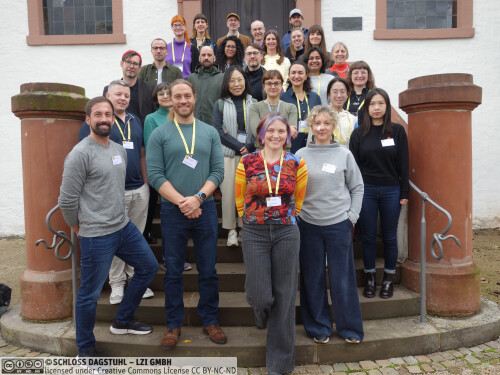
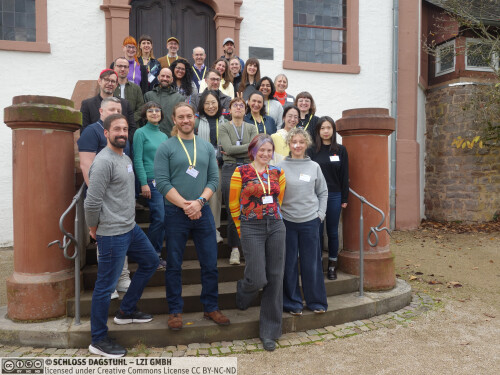
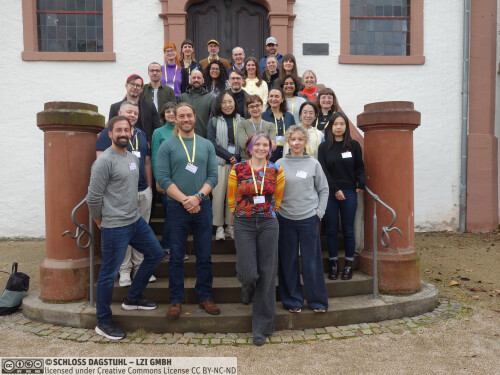
(Click in the middle of the image to enlarge)
Permalink
Please use the following short url to reference this page:
https://www.dagstuhl.de/25442
Organizers
- Tilman Dingler (TU Delft, NL)
- Elisa Giaccardi (Polytechnic University of Milan, IT)
- Steven Rick (NVIDIA - Santa Clara, US & MIT - Cambridge, US)
- Irina Shklovski (University of Copenhagen, DK)
Contact
- Marsha Kleinbauer (for scientific matters)
- Simone Schilke (for administrative matters)
Shared Documents
- Dagstuhl Materials Page (Use personal credentials as created in DOOR to log in)
Schedule
The Dagstuhl Seminar “Augmenting Human Creativity with AI” brought together 27 international researchers, artists, and practitioners from design, art, computer science, and Human-Computer Interaction (HCI). The seminar examined how generative AI systems are reshaping creative practice, not merely as productivity tools, but as infrastructures that redistribute agency, authorship, power, and responsibility. Throughout the three days filled with keynotes, provocations, discussions, and collaborative synthesis, the seminar explored three interrelated concerns: (1) how AI systems in creative practice should be critically evaluated and designed beyond efficiency and output quality; (2) how ethical governance, attribution, and ownership can be meaningfully embedded into creative AI infrastructures; and (3) how the increasing delegation of creative labor to AI systems reshapes cultural values, aesthetic norms, and societal power structures. A recurring tension throughout the seminar was that AI simultaneously amplifies and attenuates human creativity, which enables new forms of expression while constraining agency through opaque models, standardised interfaces, and platform dominance.
Two keynote talks framed these discussions. Baptiste Caramiaux’s keynote, “Regaining Power Over AI: Insights from Artistic Practices,” examined AI as a material, medium, tool, and companion, introducing a three-dimensional power framework (moral, structural, and cultural) to analyse how generative AI systems shape creative agency, authorship, and visibility. Maria Luce Lupetti’s keynote, “Down the Algorithmic Rabbit Hole: Rethinking Design and Power in AI,” challenged dominant narratives of AI “magic,” highlighting how design practices can either obscure or expose the socio-technical assumptions embedded in AI systems. Together, these perspectives foregrounded creativity as a situated, contested, and political practice rather than purely technical capabilities. Building on this foundation, participants engaged in provocations and working sessions that culminated in five thematic working groups. These groups addressed: (1) the relationship between AI systems and the uniqueness of creative practices; (2) interaction paradigms beyond text-based prompting; (3) the evaluation of creativity beyond productivity metrics; (4) authorship, attribution, and disclosure in AI-mediated creation; and (5) AI literacy and education in creative domains. Rather than producing finalised solutions, the groups articulated research questions, design principles, and longer-term trajectories spanning master projects, PhD research, and largescale collaborative initiatives.
Across the working groups, several cross-cutting research themes emerged. Participants emphasised a shift from large, general-purpose models toward smaller, situated, and personalized AI systems that better support craft, positionality, and local control. The re-authoring of creativity surfaced as a central concern, with debates around whether creators become curators of algorithmic outputs and how co-authorship with AI or simply use of AI-based tools might be made visible throughout the creative process. The seminar also highlighted the aesthetic and epistemic value of imperfection, arguing for AI systems that embrace noise, glitches, and discomfort rather than optimising for coherence and polish. In parallel, participants identified a significant evaluation gap between machine-learning benchmarks and human-centered notions of creativity, calling for process-oriented, experiential, and reflective evaluation methods. Finally, concerns about the invisibility of AI as infrastructure underscored the need to design for long-term critical reflection, even as AI systems become normalised and embedded in everyday creative practice. Overall, the Dagstuhl Seminar on Augmenting Human Creativity with AI provided an interdisciplinary forum for reframing creative AI use as a socio-technical, cultural, and ethical endeavour. The seminar’s outcomes articulate a shared research agenda that moves beyond tool-building toward the design of infrastructures, practices, and educational frameworks that preserve agency, trigger reflection, and support diverse forms of creative expression. The insights in this report lay the groundwork for future collaborations seeking to shape creative AI systems that are not only powerful but also pluralistic, transparent, and human-centred.
 Creative Commons BY 4.0
 Tilman Dingler, Elisa Giaccardi, Steven Rick, and Irina Shklovski
In recent years, AI-powered tools have experienced explosive growth in the consumer market, most notably with the advent of ChatGPT, a large language model (LLM) that has both captivated the public imagination and raised significant scrutiny. This development echoes historical moments of technological disruption, such as the introduction of the camera and the printing press – innovations that sparked both excitement and concern for their impact on established practices and professions.
As generative AI tools for text, code, images, audio, and video creation become increasingly sophisticated and accessible, they present a unique opportunity to revolutionize creative fields. These tools promise substantial productivity gains and serve as powerful catalysts for inspiration, enabling creative professionals to explore diverse design spaces rapidly. The potential for overcoming "design fixation" –the tendency to become overly focused on a limited set of solutions – is particularly noteworthy, as AI can push the boundaries of conventional creativity, leading to more innovative outcomes.
The integration of AI into creative processes is, however, not without its challenges. The reliance on AI for idea generation raises critical questions about the risk of converging toward more predictable, less novel ideas. There are concerns that AI-generated content may contribute to a regression to the mean in creative quality, potentially limiting the divergent thinking essential to true innovation. This raises the question: Could AI, in its quest to enhance creativity, inadvertently narrow the scope of exploration to what is algorithmically generated, thus stifling the creativity it aims to augment? Further, issues of authenticity, originality, and the meaning of creations arise when encountering AI-generated content. Using AI in creative tasks challenges our understanding of authorship and the perceived value of art and design. As AI tools become more sophisticated and integrated into creative workflows, the tension between leveraging these technologies and preserving the human aspects of creativity becomes increasingly apparent.
In this Dagstuhl Seminar, we will delve into these complexities by exploring the evolving partnership between generative AI tools and human creativity. We aim to focus on three core topics by bringing together experts from design, art, computing, and human-computer interaction:
- Critical Evaluation of AI-Enhanced Tools: Discuss and analyze the capabilities of AI tools that empower designers and creative professionals.
- Ethical Governance: Reflect on the ethical implications of integrating AI into creative processes, focusing on ensuring the responsible and equitable use of these technologies.
- Societal Implications: Examine the broader societal impact of delegating creative tasks to AI systems, including the potential consequences for the creative professions and cultural landscape.
The goal is to identify existing research gaps and to foster the development of AI tools that uphold ethical standards and preserve creative integrity. By considering the intimate relationship that artists, designers, and programmers often develop with their tools, we will explore how to integrate AI in ways that truly enhance, rather than diminish, the creative process.
To foster meaningful dialogue, the workshop will prioritize interactive activities and group discussions, minimizing traditional one-to-many presentations. We will kick off with a series of brief lightning talks to set the stage for deeper exploration and debate. Additionally, live demonstrations of current AI systems will be featured, offering participants a tangible sense of these technologies’ capabilities and sparking conversation on their practical applications in both research and practice.
Tilman Dingler, Elisa Giaccardi, Steven Rick, and Irina Shklovski
Please log in to DOOR to see more details.
- Jesse Josua Benjamin (TU Eindhoven, NL)
- Federico Bomba (Freie Universität Bozen, IT)
- Bapiste Caramiaux (Sorbonne University - Paris, FR) [dblp]
- Sarah Ciston (Center for Advanced Internet Studies - Bochum, DE) [dblp]
- Laura Devendorf (University of Colorado - Boulder, US) [dblp]
- Tilman Dingler (TU Delft, NL) [dblp]
- Sarah Fdili Alaoui (University of the Arts - London, GB) [dblp]
- Elisa Giaccardi (Polytechnic University of Milan, IT) [dblp]
- Lynda Hardman (CWI - Amsterdam, NL) [dblp]
- Mona Hedayati (University of Antwerp, BE & Concordia University, Montreal - CA) [dblp]
- Janet Johnson (University of Michigan - Ann Arbor, US) [dblp]
- Heekyoung Jung (University of Cincinnati, US) [dblp]
- Lone Koefoed Hansen (Aarhus University, DK) [dblp]
- Joseph Lindley (Lancaster University, GB) [dblp]
- Maria Luce Lupetti (Polytechnic University of Torino, IT) [dblp]
- Christoph Maerz (DFKI GmbH - Kaiserslautern, DE)
- Dave Murray-Rust (TU Delft, NL) [dblp]
- Philippe Pasquier (Simon Fraser University - Surrey, CA) [dblp]
- Courtney Reed (Loughbourogh University London, GB) [dblp]
- Steven Rick (NVIDIA - Santa Clara, US & MIT - Cambridge, US) [dblp]
- Irina Shklovski (University of Copenhagen, DK) [dblp]
- Vasiliki Tsaknaki (IT University of Copenhagen, DK) [dblp]
- Libuše Hannah Veprek (Universität Tübingen, DE) [dblp]
- Samangi Wadinambiarachchi (The University of Melbourne, AU) [dblp]
- Justin D. Weisz (IBM TJ Watson Research Center - Yorktown Heights, US) [dblp]
- Boyu Xu (Utrecht University, NL) [dblp]
- Hiromu Yakura (MPI für Bildungsforschung - Berlin, DE) [dblp]
Classification
- Artificial Intelligence
- Computers and Society
- Human-Computer Interaction
Keywords
- Generative AI
- Human Creativity
- Design
- Human-AI Interaction