
Dagstuhl Seminar 25432
Deep Continual Learning in the Foundation Model Era
( Oct 19 – Oct 24, 2025 )
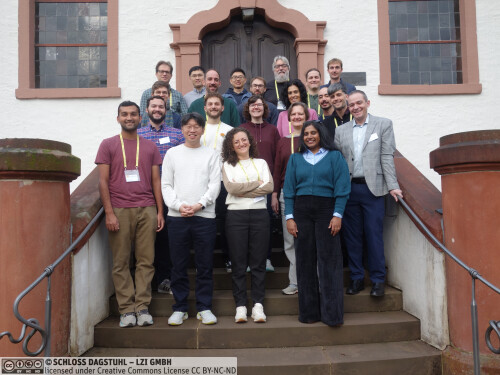
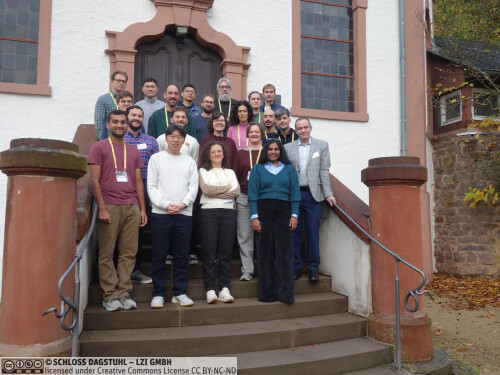
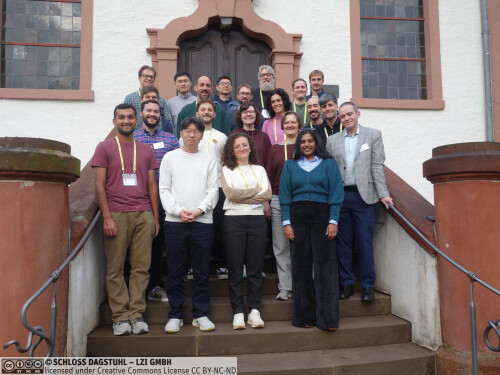
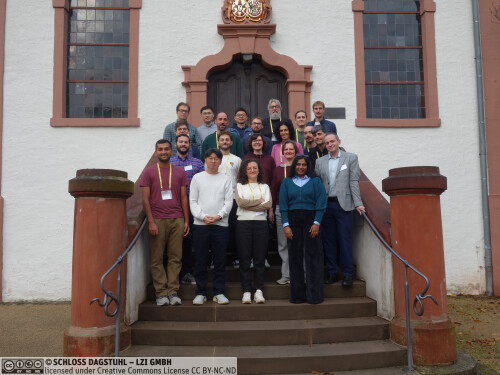
(Click in the middle of the image to enlarge)
Permalink
Please use the following short url to reference this page:
https://www.dagstuhl.de/25432
Organizers
- Christopher Kanan (University of Rochester, US)
- Martin Mundt (Universität Bremen, DE)
- Tinne Tuytelaars (KU Leuven, BE)
- Joost van de Weijer (Computer Vision Center - Barcelona, ES)
Contact
- Andreas Dolzmann (for scientific matters)
- Jutka Gasiorowski (for administrative matters)
Shared Documents
- Dagstuhl Materials Page (Use personal credentials as created in DOOR to log in)
Impacts
- Modular Memory is the Key to Continual Learning Agents : article - Dorovatas, Vaggelis; Schwerin, Malte; Bagdanov, Andrew D.; Aljundi, Rahaf; Mundt, Martin; Tuytelaars, Tinne; Ricci, Elisa; Patil, Darshan; Mendez-Mendez, Jorge; Prabhu, Ameya; Ven, Gido van de; Wang, Liyuan; Hammer, Barbara; Weijer, Joost van de; Hayes, Tyler L.; Choi, Jonghyun; Kanan, Christopher; Kudithipudi, Dhireesha; Lomonaco, Vincenzo; Caccia, Lucas; Carta, Antonio; Charlin, Laurent; Hess, Timm; Liu, Xialei - Cornell University : arXiv.org, 2026. - 15 pp..
- Modular Memory is the Key to Continual Learning Agents : Position : article in Proceedings of the 43 rd International Conference on Machine Learning, Seoul, South Korea, PMLR 306, 2026 - Dorovatas, Vaggelis; Schwerin, Malte; Mendez-Mendez, Jorge; Ven, Gido van de; Weijer, Joost van de; Aljundi, Rahaf; Mundt, Martin; Choi, Jonghyun; Wang, Liyuan; Tuytelaars, Tinne; Ricci, Elisa; Prabhu, Ameya; Patil, Darshan; Lomonaco, Vincenzo; Liu, Xialei; Kudithipudi, Dhireesha; Kanan, Christopher; Hess, Timm; Hayes, Tyler L.; Hammer, Barbara; Charlin, Laurent; Carta, Antonio; Caccia, Lucas; Bagdanov, Andrew - Openreview.net, 2026. - 18 pp..
Schedule
This summary presents the main outcomes of the Dagstuhl Seminar “Deep Continual Learning in the Foundation Model Era” (25432). Foundation models have transformed artificial intelligence and generated major socio-economic impact. However, they face significant challenges: the prevailing training paradigm, which relies on retraining models from scratch as new data arrives, is unsustainable, models must also be adapted to better align with human values and mitigate biases, and adaptation often leads to catastrophic forgetting. The field of deep continual learning focuses on enabling systems to acquire knowledge over time from non-stationary data streams. It provides theoretical and methodological tools that can help address key limitations of foundation models, including efficient updating, adaptation at scale, alignment with human values, and bias mitigation.
The objective of the seminar was to bring together world-class researchers in the fields of deep continual learning and foundation model training to examine their interplay, identify key challenges, and outline promising directions for future research.
As a major outcome of the seminar, the following promising research directions were identified:
- New memory usage paradigms are emerging for continual learning in foundation models. Approaches that combine parametric learning with in-context learning are a promising path toward rapid adaptation and experience accumulation. In-context learning reduces the need for costly and forgetting-prone parameter updates, while periodic consolidation of in-context knowledge through distillation into model parameters may limit the computational overhead associated with growing context.
- New methods are needed for the efficient evaluation of catastrophic forgetting in foundation models during adaptation, as full-model evaluation is computationally prohibitive in iterative adaptation settings.
- Model scale, pre-training, and architectural choices fundamentally alter the stability–plasticity trade-off. Systematic studies across model scales and objectives are needed to understand when scale inherently mitigates forgetting and when explicit continual learning mechanisms remain necessary.
- Continual learning for foundation models requires new benchmarks that go beyond synthetic task sequences and better reflect real-world usage. Promising benchmark domains include personalization over time, multi-agent interaction, model self-improvement loops, and unlearning for privacy or safety. These benchmarks should impose realistic compute constraints.
 Creative Commons BY 4.0
 Christopher Kanan, Martin Mundt, Tinne Tuytelaars, and Joost van de Weijer
Foundation models are gigantic deep neural networks trained using self-supervised learning. They are revolutionizing AI and have resulted in significant socio-economic impact. They excel at many downstream applications. Deep continual learning studies accumulating knowledge from non-stationary data streams, a highly desirable capability for future AI systems. Continual learning offers a range of tools, theories, and methods that can effectively address some of the primary challenges in the use of foundation models.
Research on foundation models and continual learning converge on numerous topics. There is a pressing need for theory and methodologies for the continual learning of foundation models, bypassing the costly retraining from scratch when new data arrives, while ensuring the ongoing relevance of models. Foundation models have also sparked societal concerns, particularly around intellectual property (e.g., image generators) and undesired skills (e.g., nudity generation). The potential of continual learning to address these concerns, such as through the development of "unlearning" theory to remove these skills, offers a promising future. Further, the evaluation of forgetting on foundation models necessitates new methodologies and metrics. Due to their vast size, parameter-efficient and compute-efficient methods for continual learning need to be devised. In summary, the rise of foundation models and their interaction with continual learning research, present a range of urgent, impactful and societally relevant research topics.
In this Dagstuhl Seminar we are planning to discuss the following topics:
- How can continual learning contribute to the sustainable, data- and energy-efficient, updating of foundation models?
- How to use continual learning with parameter-efficient adaptation methods required due to the gigantic size of foundation models?
- How can continual adaptation aid in aligning foundation models with human values, in selectively remediating biases, and in personalization?
- What new benchmarks and evaluation metrics are needed to propel continual foundation model learning research, and how do we measure knowledge accumulation and loss in foundation models?
- How can we exploit continual learning theory to address the unlearning of undesired skills and the removal of private information in foundation models?
- How can we integrate new continual learning opportunities offered by foundation models, such as in-context learning or retrieval-based schemes?
In discussing these topics with a group of world-class researchers, we aim to set the research agenda on this topic for the years to come.
Christopher Kanan, Martin Mundt, Tinne Tuytelaars, and Joost van de Weijer
Please log in to DOOR to see more details.
- Rahaf Aljundi (Toyota Motor Europe - Zaventem, BE) [dblp]
- Andrew D. Bagdanov (University of Florence, IT) [dblp]
- Lucas Caccia (Microsoft Research - Montreal, CA)
- Antonio Carta (University of Pisa, IT) [dblp]
- Laurent Charlin (HEC Montréal, CA) [dblp]
- Jonghyun Choi (Seoul National University, KR)
- Barbara Hammer (Universität Bielefeld, DE) [dblp]
- Tyler Hayes (Georgia Institute of Technology, US) [dblp]
- Timm Felix Hess (KU Leuven, BE)
- Christopher Kanan (University of Rochester, US) [dblp]
- Dhireesha Kudithipudi (University of Texas - San Antonio, US) [dblp]
- Xialei Liu (Nankai University - Tianjin, CN) [dblp]
- Vincenzo Lomonaco (University of Pisa, IT) [dblp]
- Jorge Mendez-Mendez (Stony Brook University, US)
- Martin Mundt (Universität Bremen, DE) [dblp]
- Darshan Patil (MILA - Montreal, CA)
- Ameya Prabhu (Universität Tübingen, DE)
- Elisa Ricci (University of Trento, IT) [dblp]
- Tinne Tuytelaars (KU Leuven, BE) [dblp]
- Bartlomiej Twardowski (Computer Vision Center - Barcelona, ES) [dblp]
- Gido van de Ven (University of Groningen, NL) [dblp]
- Joost van de Weijer (Computer Vision Center - Barcelona, ES) [dblp]
- Liyuan Wang (Tsinghua University - Beijing, CN)
Related Seminars
- Dagstuhl Seminar 23122: Deep Continual Learning (2023-03-19 - 2023-03-24) (Details)
Classification
- Artificial Intelligence
- Computer Vision and Pattern Recognition
- Machine Learning
Keywords
- Continual learning
- Foundation Models
- Deep Learning