
Dagstuhl Seminar 25361
Natural Language Processing for Mental Health
( Aug 31 – Sep 05, 2025 )
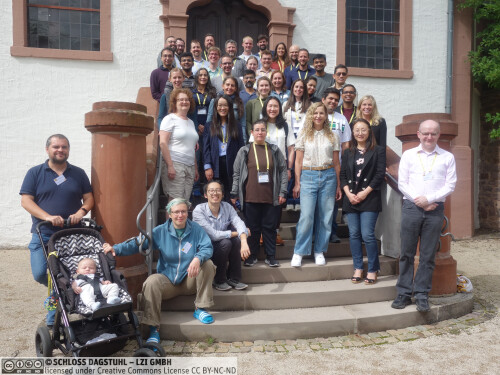
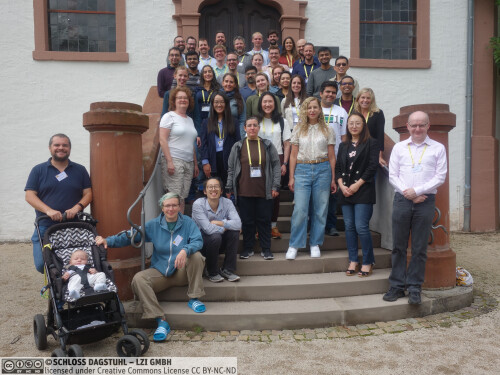
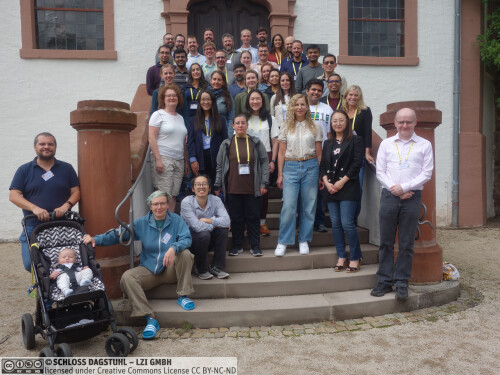
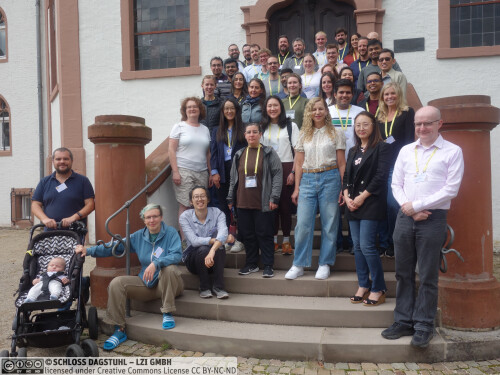
(Click in the middle of the image to enlarge)
Permalink
Please use the following short url to reference this page:
https://www.dagstuhl.de/25361
Organizers
- Dana Atzil-Slonim (Bar-Ilan University - Ramat-Gan, IL)
- Iryna Gurevych (TU Darmstadt, DE)
- Dirk Hovy (Bocconi University - Milan, IT)
- Diyi Yang (Stanford University, US)
Contact
- Andreas Dolzmann (for scientific matters)
- Simone Schilke (for administrative matters)
This full report summarizes the outcomes of our Dagstuhl Seminar on “Natural Language Processing for Mental Health” (25361). The seminar was motivated by an urgent and growing global need: mental health issues are affecting millions of people worldwide, yet the majority of individuals in need of care do not receive any treatment, especially those from marginalized, low-income, or rural populations. While many mental health conditions are treatable, or even preventable with early detection and intervention, people often don’t receive support until their concerns have escalated. In parallel, NLP has made remarkable progress in recent years, largely due to advances in large language models (LLMs) and the availability of large-scale textual data from sources like social media, online forums, and clinical records. These technologies therefore offer a variety of opportunities in addressing the problems outlined above, both for patients and in therapist training. Indeed, NLP models are already being deployed in mental health applications. However, both the existing and envisioned use cases raise critical questions around feasibility, scalability, and responsibility.
To address these, the seminar brought together an interdisciplinary group of researchers from NLP, clinical psychology, HCI, and digital health to assess where, how, and under what conditions NLP can be responsibly used to support mental health needs. Concretely, the seminar focused on:
- Understanding the potential of NLP, and in particular LLMs, to support mental health diagnosis, intervention, and therapeutic processes;
- Identifying critical gaps in technical feasibility, evaluation, and deployment of these tools in real-world, high-stakes clinical settings;
- Exploring responsible and interdisciplinary solutions that bridge NLP, psychology, human–computer interaction, and ethics.
As a major result from the seminar, we identified the following problems and future directions:
- The need for systematic evaluation frameworks for NLP models used in psychotherapy and mental health support, including benchmarks, as well as longitudinal, multilingual, and real-world evaluation protocols.
- The challenge of simulating clients or patients, and therapists using LLMs to support therapist training, research, and practice, particularly concerning modeling therapeutic authenticity, diversity, and change processes.
- The persistent knowledge and communication gap between NLP and clinical psychology communities, and the urgent need to bridge this divide through interdisciplinary collaboration to ensure clinical relevance and real-world utility.
- The lack of visibility and impact pathways for research in NLP and mental health across both technical and applied domains, and how to promote this work across venues, funding agencies, and policy-making spaces.
The seminar's structure was designed to support both critical discussion and creative collaboration. Through a program of vision talks, lightning presentations, breakout groups, and informal exchanges, the seminar was organized around four thematic clusters: (1) understanding how mental states change and how therapeutic change occurs; (2) how NLP can support therapist training and real-time feedback; (3) identifying technological, privacy, and multilingual challenges; and (4) addressing evaluation, validation, and ethical concerns.
This seminar has laid a solid foundation for a crucial research area. Three perspective papers are in development: one focused on simulating patients using LLMs, one on evaluation challenges and opportunities in psychotherapy applications, and one on strengthening interdisciplinary collaboration between NLP and mental health communities. Additionally, a blog post is being prepared to reflect on how to promote the broader impact of this work, and a workshop submission motivated by the seminar is currently under review for SIGCHI 2026.
These outcomes align with our initial goals: (1) to produce joint research publications and collaboration opportunities, such as position papers that map out the challenges and opportunities in building responsible and robust NLP systems for mental health; and (2) to form a cross-field community that continues to connect NLP and mental health researchers -- both in technical venues and clinical practice contexts.
 Creative Commons BY 4.0
 Dana Atzil-Slonim, Iryna Gurevych, Dirk Hovy, and Diyi Yang
The prevalence of mental health issues is increasing, affecting millions of people worldwide. Currently, most individuals requiring mental health services do not receive any form of treatment, with even greater limitations in access for ethnic minorities, low-income populations, and rural residents. In many cases, mental health issues can be effectively treated or, at times, prevented through early detection and intervention. However, many individuals do not receive the support they require until their mental health concerns have escalated.
NLP has made remarkable progress in recent years, driven by breakthroughs in large language models (LLMs) and the availability of large-scale datasets such as data from social media posts, online forums, and patient records. These advances have made NLP models highly capable of extracting valuable insights from text data related to mental health. This development raises two natural questions: (1) How well, if at all, can NLP enable early detection, diagnosis, and intervention, not only for patients or support seekers but also for therapists or support providers? (2) Can NLP-driven solutions help bridge the gap between the escalating demand for mental health resources and the limited availability of mental health professionals, providing scalable and immediate support through chatbots, virtual therapists, and data- driven interventions? Both questions touch upon the technical feasibility as well as the ethical concerns about the use of a developing technology in a sensitive application.
In this Dagstuhl Seminar, we will underscore key areas in which NLP has the potential to profoundly enhance mental health treatments, including but not limited to (1) understanding how mental states change and how therapeutic change occurs; (2) how NLP can help therapist training and feedback; (3) technological gaps, privacy and multilingual issues; (4) evaluation, validation and ethical concerns.
Our seminar has two concrete objectives: (1) Joint research publications or collaboration opportunities, such as position papers that outline current challenges and opportunities around how to build responsible and robust NLP models to improve mental health. Some deliverables include compiling a report around outcomes associated with each topic; (2) Formation of a cross-field community for NLP for mental health, both in NLP venues as well as the psychotherapy communities, to bridge the two communities for interdisciplinary work.
Dana Atzil-Slonim, Iryna Gurevych, Dirk Hovy, Vivek Srikumar, and Diyi Yang
- Tim Althoff (University of Washington - Seattle, US) [dblp]
- Hiba Arnaout (TU Darmstadt, DE) [dblp]
- Dana Atzil-Slonim (Bar-Ilan University - Ramat-Gan, IL) [dblp]
- Daniel Blonigen (Stanford University, US)
- Stevie Chancellor (University of Minnesota - Minneapolis, US) [dblp]
- Monojit Choudhury (MBZUAI - Abu Dhabi, AE) [dblp]
- Torrey Creed (University of Pennsylvania, US) [dblp]
- Cristian Danescu-Niculescu-Mizil (Cornell University - Ithaca, US) [dblp]
- Munmun De Choudhury (Georgia Institute of Technology - Atlanta, US) [dblp]
- Gavin Doherty (Trinity College Dublin, IE) [dblp]
- Steffen Eberhardt (Universität Trier, DE)
- Anmol Goel (TU Darmstadt, DE)
- Philipp Graffe (Universität Stuttgart, DE)
- Iryna Gurevych (TU Darmstadt, DE) [dblp]
- Nick Haber (Stanford University, US)
- Dirk Hovy (Bocconi University - Milan, IT) [dblp]
- Darya Hryhoryeva (Charles University - Prague, CZ)
- Minlie Huang (Tsinghua University - Beijing, CN) [dblp]
- Zac Imel (University of Utah, US) [dblp]
- Hamidreza Jamalabadi (Universität Marburg, DE)
- Christopher Landau (Universitätsklinikum Frankfurt, DE)
- Jana Lasser (Universität Graz, AT) [dblp]
- Maria Liakata (Queen Mary University of London, GB) [dblp]
- Ryan Louie (Stanford University, US) [dblp]
- Wolfgang Lutz (Universität Trier, DE)
- Matteo Malgaroli (NYU School of Medicine - New York, US) [dblp]
- Clarissa Ong (University of Louisville, US)
- Flor Miriam Plaza del Arco (Leiden University, NL)
- Emily Provost (University of Michigan - Ann Arbor, US) [dblp]
- Julia R Pozuelo (Harvard Medical School, US)
- Alla Rozovskaya (City University of New York, US)
- Brian Schwartz (Universität Trier, DE)
- H. Andrew Schwartz (Vanderbilt University - Nashville, US) [dblp]
- Raj Sanjay Shah (Georgia Institute of Technology - Atlanta, US) [dblp]
- Bhavyajeet Singh (TU Darmstadt, DE)
- Thamar Solorio (MBZUAI - Abu Dhabi, AE) [dblp]
- Aseem Srivastava (MBZUAI - Abu Dhabi, AE)
- Jina Suh (Microsoft Research - Redmond, US) [dblp]
- Andreas Triantafyllopoulos (Klinikum rechts der Isar der TU München, DE) [dblp]
- Diyi Yang (Stanford University, US) [dblp]
Classification
- Artificial Intelligence
- Computers and Society
Keywords
- Mental Health
- Large Language Models
- Psychotherapy
- Models and Evaluation
- Ethics and Privacy