
Dagstuhl Seminar 25311
Generative AI in Programming Education
( Jul 27 – Aug 01, 2025 )
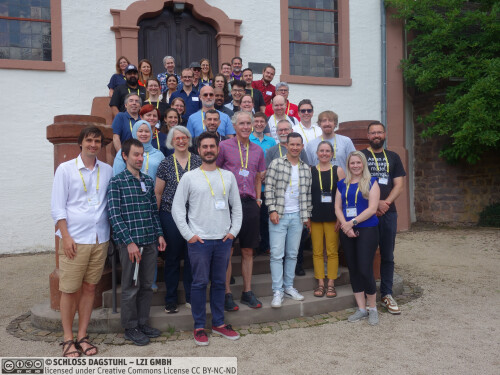
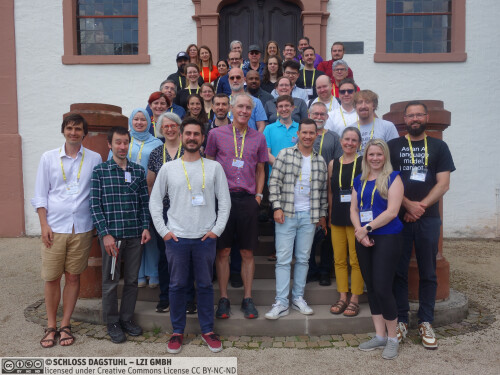
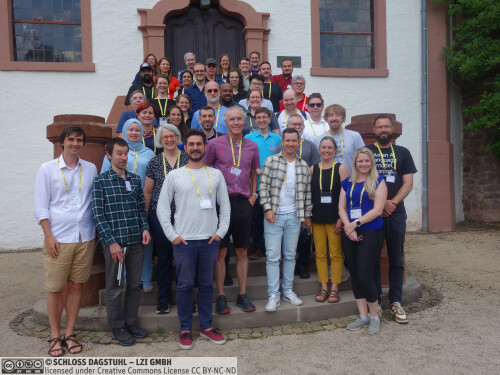
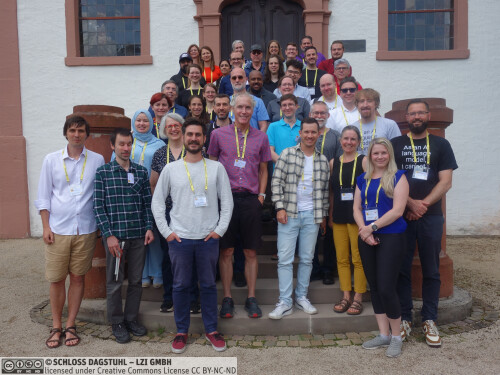
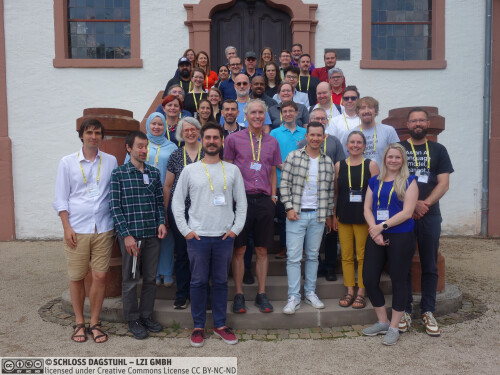
(Click in the middle of the image to enlarge)
Permalink
Please use the following short url to reference this page:
https://www.dagstuhl.de/25311
Organizers
- Brett A. Becker (University College Dublin, IE - in memoriam, † September 30, 2024)
- Michelle Craig (University of Toronto, CA)
- Paul Denny (University of Auckland, NZ)
- Natalie Kiesler (Technische Hochschule Nürnberg, DE)
- James Prather (Abilene Christian University, US)
Contact
- Andreas Dolzmann (for scientific matters)
- Susanne Bach-Bernhard (for administrative matters)
Schedule
Generative AI stands to significantly disrupt education in general and programming education is no exception. In addition, learning to program has several unique requirements and characteristics that require specific approaches. Evidence from the past several decades on how humans learn programming supports the commonly adopted approach of having students write many small programs. Often these are checked, and feedback is provided, by automated assessment tools. However, Generative AI has likely rendered this approach obsolete given that easy-to-use tools are now readily available that can solve introductory computing problems with natural language prompts. At the same time, it is well known that the large language models that power Generative AI tools sometimes provide outputs that are either incorrect or inappropriate for the current understanding of a learner, raising concerns around student over-reliance and poor learning outcomes.
Educators are currently taking a variety of approaches, including ignoring the issue. Generative AI is a nascent, yet very rapidly developing field and new challenges and opportunities arise frequently making it extremely difficult for educators to keep pace with developments. Prototype tools that leverage Generative AI to facilitate learning are appearing, however most have yet to be deployed or adopted at scale. New pedagogical approaches are also emerging to foster the development of new kinds of skills, such as effective prompt creation, and new learning resources such as textbooks are appearing that teach programming hand in hand with Generative AI. Such approaches, however, have not yet been evaluated at scale as the field is developing so rapidly.
This Dagstuhl Seminar had the goal to bring together experts and stakeholders in Generative AI and computing education to foster collaboration and to chart a way forward as Generative AI continues to improve and proliferate. It was the goal of this seminar to leverage the experience and knowledge of dozens of programming education experts from around the world to form an enduring community of practice. During the seminar, we started to develop further strategies for incorporating LLMs into programming education and to rigorously evaluate their use and impact. We also explored the following topics in the context of Generative AI in programming education: accessibility; diversity, equality, and inclusion; resources; introductory programming for computer science majors and non-majors; advanced courses (that use programming); curriculum changes; novel pedagogies, approaches and tools; and industry use and changes that may lead to new learning outcomes.
These discussions were informed by participants’ prior research and addressed the following objectives:
- Identify current implications of Generative AI on programming education, learning objectives, and curricula.
- Develop recommendations for the pedagogical integration of Generative AI in programming courses.
- Identify and establish interdisciplinary research objectives and questions to investigate Generative AI in programming education.
The seminar was structured into several sections, with all 42 participants actively involved: lightning and keynote talks followed by group brainstorming sessions, and dedicated workshop group sessions. At the beginning of the seminar, every attendee introduced themselves, and the seminar leaders provided an overview of the current GenAI landscape by introducing recent studies, emerging themes, trends, and tools. In addition, we had keynote presentations and discussions on AI in the curriculum, and specifically, Google’s AI curriculum was presented. The keynote talks were delivered, as follows:
- Paul Denny: Opening Remarks: Generative AI and the Future of Programming Education
- Natalie Kiesler and James Prather: Beyond the Hype: A Sneak Peek into the Comprehensive Review of Current Trends in Generative AI Research, Teaching Practices, and Tools
- Dennis Bouvier: The Rest of the Robots: GenAI in Upper-level Computing
- Leo Porter and Daniel Zingaro: Learn AI-Assisted Python Programming
- James Prather: A New Curriculum for Computer Science that integrated GenAI: A Collaboration between Google and Academia
- Titus Winters: Generative AI in Software Engineering
We dedicated two more sessions to lightning talks and tool presentations. Prior to the seminar, every attendee had been invited to present recent findings, insights, or tools. This led to 20 lightning talks and tool presentations, which are represented in this report.
The lightning talk and tool sessions were accompanied by brainstorming sessions to identify recent challenges, opportunities, and future directions for research and practice. The brainstorming sessions also helped to form working groups. These subgroups focused on the following aspects: learning outcomes, assessment, social learning, CS1, meta-cognition, access and equity, quality use of GenAI, human values, introductory computing for non-majors, and AI-integrated learning tools. After two check-ins with the subgroups, several of them had merged, so that ultimately, three large working groups remained. The results of their discussions are summarized in the full report.
 Creative Commons BY 4.0
 Natalie Kiesler, Michelle Craig, Paul Denny, and James Prather
Generative AI stands to significantly disrupt education in general and programming education is no exception. In addition, learning to program has several unique requirements and characteristics that require specific approaches. Evidence from the past several decades on how humans learn programming supports the commonly adopted approach of having students write many small programs. Often these are checked, and feedback is provided, by automated assessment tools. However, Generative AI has likely rendered this approach obsolete given that easy-to-use tools are now readily available that can solve introductory computing problems with natural language prompts. At the same time, it is well known that the large language models that power Generative AI tools sometimes provide outputs that are either incorrect or inappropriate for the current understanding of a learner, raising concerns around student over-reliance and poor learning outcomes.
Educators are currently taking a variety of approaches, including ignoring the issue. Generative AI is a nascent, yet very rapidly developing field and new challenges and opportunities arise frequently making it extremely difficult for educators to keep pace with developments. Prototype tools that leverage Generative AI to facilitate learning are appearing, however most have yet to be deployed or adopted at scale. New pedagogical approaches are also emerging to foster the development of new kinds of skills, such as effective prompt creation, and new learning resources such as textbooks are appearing that teach programming hand in hand with Generative AI. Such approaches, however, have not yet been evaluated at scale as the field is developing so rapidly.
This Dagstuhl Seminar aims to bring together experts and stakeholders in Generative AI and computing education to foster collaboration and to chart a way forward as Generative AI continues to improve and proliferate. It is the goal of this seminar to leverage the experience and knowledge of dozens of programming education experts from around the world to form an enduring community of practice. During the Dagstuhl Seminar, we intend to develop strategies for incorporating LLMs into programming education and to rigorously evaluate their use and impact. This seminar will explore the following topics in the context of Generative AI in programming education: accessibility; diversity, equality, and inclusion; resources; introductory programming for computer science majors and non-majors; advanced courses (that use programming); curriculum changes; novel pedagogies, approaches and tools; and industry use and changes that may lead to new learning outcomes. These discussions will be informed by participants’ prior research and address the following objectives:
- Identify current implications of Generative AI on programming education, learning objectives, and curricula.
- Develop recommendations for the pedagogical integration of Generative AI in programming courses.
- Identify and establish interdisciplinary research objectives and questions to investigate Generative AI in programming education.
Brett A. Becker, Michelle Craig, Paul Denny, and Natalie Kiesler
- Ibrahim Albluwi (Princess Sumaya University for Technology - Amman, JO) [dblp]
- Imen Azaiz (LMU München, DE) [dblp]
- Jamie Benario (Google - Chicago, US) [dblp]
- Dennis Bouvier (United States Air Force Academy, US) [dblp]
- Claus Brabrand (IT University of Copenhagen, DK) [dblp]
- Laura E. Brown (Michigan Technological University - Houghton, US) [dblp]
- Neil Brown (King's College London, GB) [dblp]
- Michelle Craig (University of Toronto, CA) [dblp]
- Paul Denny (University of Auckland, NZ) [dblp]
- Rodrigo Duran (Federal Institute of Brasília, BR) [dblp]
- Carolin Hahnel (Ruhr-Universität Bochum, DE) [dblp]
- Earl Huff (University of Texas - Austin, US) [dblp]
- Christopher D. Hundhausen (Oregon State University - Corvallis, US) [dblp]
- Amanpreet Kapoor (University of Florida - Gainesville, US) [dblp]
- Hieke Keuning (Utrecht University, NL) [dblp]
- Natalie Kiesler (Technische Hochschule Nürnberg, DE) [dblp]
- Tobias Kohn (KIT - Karlsruher Institut für Technologie, DE) [dblp]
- Dennis Komm (ETH Zürich, CH) [dblp]
- Juho Leinonen (Aalto University, FI) [dblp]
- Colleen Lewis (University of Illinois Urbana-Champaign, US) [dblp]
- Kevin Lin (University of Washington - Seattle, US) [dblp]
- Dominic Lohr (Universität Erlangen-Nürnberg, DE) [dblp]
- Andrew James Luxton-Reilly (University of Auckland, NZ) [dblp]
- Stephen MacNeil (Temple University - Philadelphia, US) [dblp]
- Victor-Alexandru Padurean (MPI für Software Systems - Saarbrücken, DE) [dblp]
- Leo Porter (University of California - San Diego, US) [dblp]
- James Prather (Abilene Christian University, US) [dblp]
- Brent Reeves (Abilene Christian University, US) [dblp]
- Karen Reid (University of Toronto, CA) [dblp]
- Jaromír Šavelka (Carnegie Mellon University - Pittsburgh, US) [dblp]
- Daniel Schiffner (DIPF - Frankfurt am Main, DE) [dblp]
- Jan Schneider (DIPF - Frankfurt am Main, DE) [dblp]
- Adish Singla (MPI-SWS - Saarbrücken, DE) [dblp]
- David H. Smith IV (Virginia Polytechnic Institute - Blacksburg, US) [dblp]
- Jacqueline Staub (Universität Trier, DE) [dblp]
- Sven Strickroth (LMU München, DE) [dblp]
- Claudia Szabo (University of Adelaide, AU) [dblp]
- Shubbhi Taneja (Worcester Polytechnic Institute, US) [dblp]
- Christina Weers (Goethe-Universität - Frankfurt am Main, DE)
- Michel Wermelinger (The Open University - Milton Keynes, GB) [dblp]
- Titus Winters (Adobe - New York, US)
- Daniel Zingaro (University of Toronto Mississauga, CA) [dblp]
Related Seminars
- Dagstuhl Seminar 27062: What Should We Teach Computer Science Students in the Age of AI? (2027-02-07 - 2027-02-12) (Details)
Classification
- Artificial Intelligence
- Computers and Society
- Software Engineering
Keywords
- Computer Programming
- Large Language Models
- Generative AI
- Artificial Intelligence
- Computing Education