
Dagstuhl Seminar 25271
Policy Modeling and Reasoning in Sociotechnical Systems
( Jun 29 – Jul 04, 2025 )
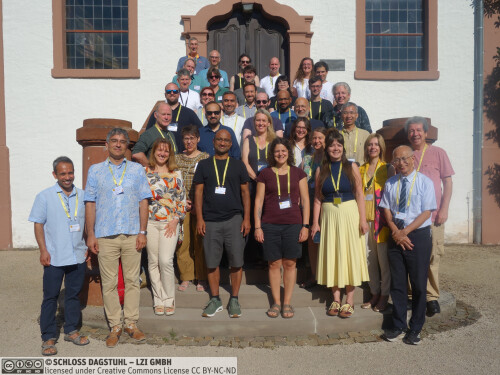
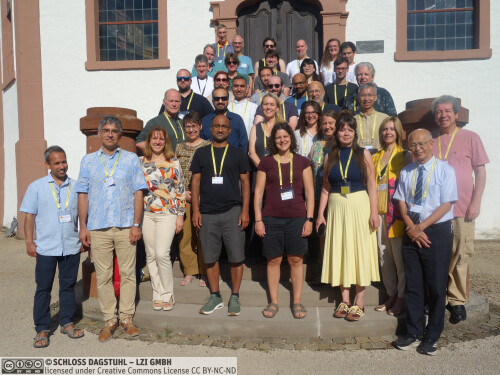
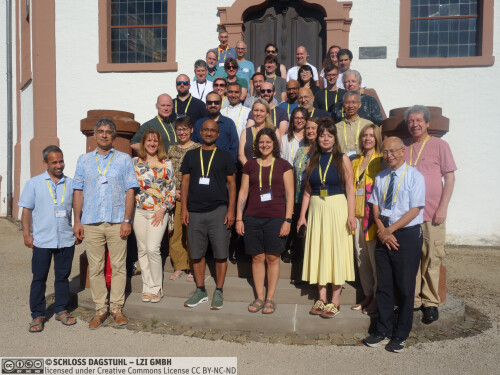
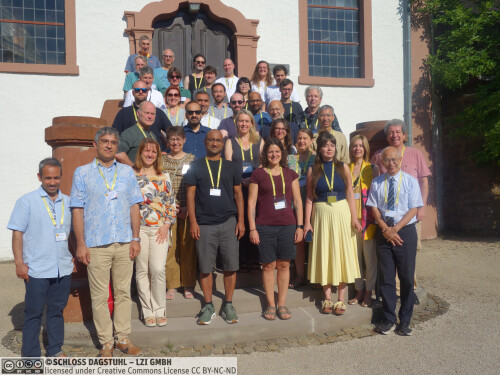
(Click in the middle of the image to enlarge)
Permalink
Please use the following short url to reference this page:
https://www.dagstuhl.de/25271
Organizers
- Marina De Vos (University of Bath, GB)
- Nicoletta Fornara (USI – Lugano, CH)
- Munindar P. Singh (North Carolina State University - Raleigh, US)
- Leon van der Torre (University of Luxembourg, LU)
Contact
- Michael Gerke (for scientific matters)
- Susanne Bach-Bernhard (for administrative matters)
Schedule
- Des enseignants chercheurs de l’Institut Fayol invités au prestigieux séminaire Dagstuhl - Institut Fayol, Mines Saint-Étienne, Actualiés, July 9, 2025
Introduction
A policy is a declarative basis for a decision by an individual or organisation. In computing, policies occupy the fruitful space between (social or legal) norms and (architectural or algorithmic) mechanisms. Specifically, a policy is an explicit knowledge-based machine-processable representation that guides the decision-making of an autonomous party. Previously, policies have been studied in computing from a primarily technical standpoint, e.g., in characterising access control in a database management system.
This Dagstuhl Seminar takes a fresh and comprehensive perspective on policies by viewing them as part of a sociotechnical system (STS) comprising intelligent agents and people. What makes policies particularly attractive in the modern milieu, with the rise of Artificial Intelligence (AI), is that they promise transparency, interpretability, and support for effective explanations as well as opportunities for making improvements to individual agents or the system. Yet major challenges remain in understanding how to (1) model policies (so they express stakeholder needs in emerging problem domains precisely, clearly, and succinctly), (2) provide a formal semantics for them that respects the autonomy of and interactions between individual agents, and (3) reason about them efficiently. Among these challenges are handling conflicts, allowing agents to deviate from policies, and understanding the trade-offs between system architectures that accommodate different levels of autonomy and efficiency.
Organisation of the Seminar
The seminar was held over the week of June 29 to July 04, 2025 (Monday to Friday with arrival on Sunday). We had 36 on-site participants. We started the first day with a twominute lightning talk of each of the participants. Each participant was asked to answer the following questions: “what I’m doing, what I want to discuss here, and what input I would like”. Before the Monday lunch, we had our two invited vision talks:
Matthew Arrott presented his vision from an industrial perspective in “Adoption of Interaction Protocols in Multi-Party Financial Transaction Platforms”
Pınar Yolum gave her view from an academic perspective in “Sociotechnical Thinking of Privacy”.
After lunch, we brainstormed in random groups on topics for discussion for the week, followed by an open space session to determine the working groups for the week. We settled on
- Concepts: What are the underlying aspects of this interdisciplinary field and can be defined consistently?
- Agentic AI: How can we make agents interact and reason with human users through large language models (LLMs)?
- Standardisation: How can we facilitate global data sharing and compliance in a world with competing business interests?
- Coevolution: How can we make sure that STS evolve with the societies they operate in?
For the remainder of the seminar, we focused on discussing these topics, with the intention of coming up with plans for research publications in each of them. This was done through breakout groups and plenary discussions for cross-fertilisation between groups. Participants were encouraged to move between groups. At the end of each day, we had one or two primers of one of the participating disciplines. These primers addressed
- Judith Simon, “Ethics”.
- Rigo Wenning, “Standardisation”.
- Amit K. Chopra, “Programming with Norms”.
- Harko Verhagen and Julian Padget, “The Value of Values”.
- Beishui Liao, “Logic for New Generation AI: An Argumentation Based Methodology”.
- Joris Hulstijn, “Regulatory Supervision”.
In keeping with Dagstuhl tradition, we organised a social event. While normally this would be an excursion or a walk, we decided, due to the excessive heat that week, to stay at the Castle and have a local wine tasting. Julian Padget and Harko Verhagen kindly hosted the event. The final session of the seminar was dedicated to looking ahead and discussing plans for future collaboration and publications as a result of working group discussions. We also discussed the possibility of a follow-up Dagstuhl Seminar. Overall, the seminar was highly engaging, intellectually stimulating, and a great success.
Outcome of the Seminar
Scientific contentOpen problems: Each of the four working groups selected by the participants focused on advancing understanding of open problems in the field. The working group reports at the end of this document detail the context of each working group, the progress they made during the seminar, which further challenges were identified, and how the group will take the topic forward.
New connections: The seminar brought together researchers who are working in the broad area of policy modelling but who approach that subject from different angles. Through primers, discussion in the streams, and in social time, we saw interesting exchanges of ideas among the subcommunities. We hope that these interactions will be fostered into new collaborations.
Extensive collaborations: Participants extensively discussed problems and challenges with colleagues, establishing new avenues for collaboration or reinforcing existing ones.
 Creative Commons BY 4.0
 Marina De Vos, Nicoletta Fornara, Munindar P. Singh, and Leon van der Torre
In an increasingly digital world, where agents (personal assistants, digital companions, and autonomous agents) and sociotechnical systems (comprising intelligent agents and people) are increasingly a reality, the study of the entire lifecycle of problems in policy dealing is increasingly crucial and urgent . As policies are fundamental for human societies, it is reasonable to consider that their integration in distributed and decentralized sociotechnical systems is fundamental for their successful interactions with humans.
The design of a policy in a sociotechnical system faces a fundamental trade-off between the autonomy accorded to member agents and the control exercised over those agents to guide them toward stakeholder objectives. Crucial research challenges consist of studying: (i) The architecture comprising a socio-technical system’s social and technical levels, including what assumptions member agents can make about each other and what guarantees they can expect from the social and technical tiers. These guarantees can be expressed as policies and motivate interest in an expanded view of policies and may include organizational controls, such as sanctions applied for deviation from a policy. (ii) The models , the constructs that underpin the policies being conceived, including the languages in which they are expressed and how they relate to other parts of the relevant information systems and considerations of their formal and operational semantics. (iii) The reasoning that concerns how decisions can be derived from policies given the facts and the reasoning about policies, such as whether they conflict or one subsumes another. It incorporates monitoring to enable reasoning on specific instances as well as determining if a particular deviation was legitimate. (iv) The methodology that concerns ways in which policies may be specified for a sociotechnical system given stakeholder requirements. It incorporates making changes in light of observed decisions, whether deviations took place, and whether the outcomes and the deviations (if any) were deemed legitimate.
This Dagstuhl Seminar will synthesize research perspectives from computing, with insights from the law, public administration, and the social sciences. In particular, the relevant communities in computing include Semantic Web, Knowledge Representation and Reasoning, Deontic Logics, Logic Programming, Multiagent Systems, Privacy and Security, and Legal Informatics.
The objective of this seminar is to provide a platform for researchers from different fields to form a new community. Specifically, we will motivate participants to define new research problems along with promising ways of tackling them, draft future projects and start new collaborations. The outcome of these discussions will be a research roadmap . Another objective is to identify these systems’ existing and potential societal consequences. (What are the risks? What are the opportunities? What are the beneficial use cases for these systems?)
The agenda will be driven by specific needs (identified via extended abstracts) from a variety of application domains: e-government, social services, finance, taxation, cybersecurity, and the services sector.
In terms of event format, the seminar will be guided by short introductory talks given by participants, structured small group work sessions as well as unstructured (and thereby more open-ended) discussions, and tutorials where participants from one discipline need to be brought up to speed with the state of the art in the other relevant disciplines, and demonstrations from use case from projects and communities present. We plan a social event on Wednesday afternoon.
Marina De Vos, Nicoletta Fornara, Munindar P. Singh, and Leon van der Torre
- Nirav Ajmeri (University of Bristol, GB) [dblp]
- Matthew Arrott (Coactive Computing, US)
- Matteo Baldoni (University of Turin, IT) [dblp]
- Cristina Baroglio (University of Turin, IT) [dblp]
- Victor Charpenay (Mines Saint-Étienne, FR) [dblp]
- Amit K. Chopra (Lancaster University, GB) [dblp]
- Mehdi Dastani (Utrecht University, NL) [dblp]
- Marina De Vos (University of Bath, GB) [dblp]
- Davide Dell'Anna (Utrecht University, NL) [dblp]
- Frank Dignum (University of Umeå, SE) [dblp]
- Beatriz Esteves (Ghent University, BE)
- Nicoletta Fornara (USI – Lugano, CH) [dblp]
- Joris Hulstijn (Utrecht University, NL) [dblp]
- Timotheus Kampik (SAP Berlin, DE & Umeå University, SE) [dblp]
- Nadin Kokciyan (University of Edinburgh, GB) [dblp]
- Beishui Liao (Zhejiang University, CN) [dblp]
- Réka Markovich (University of Luxembourg, LU) [dblp]
- Pradeep Murukannaiah (TU Delft, NL) [dblp]
- Vivek Nallur (University College Dublin, IE) [dblp]
- Luis Gustavo Nardin (IMT Mines Saint-Étienne, FR) [dblp]
- Sebastian Neumaier (FH - St. Pölten, AT) [dblp]
- Julian Padget (University of Bath, GB) [dblp]
- Victor Rodriguez Doncel (Polytechnic University of Madrid, ES) [dblp]
- Susana Rodríguez Verdugo (Kunveno Digital - Madrid, ES)
- Ken Satoh (Research Organization of Information and Systems, JP) [dblp]
- Jaime Sichman (University São Paulo, BR) [dblp]
- Judith Simon (Universität Hamburg, DE) [dblp]
- Munindar P. Singh (North Carolina State University - Raleigh, US) [dblp]
- Simon Steyskal (Siemens AG - Wien, AT) [dblp]
- Sz-Ting Tzeng (University of Umeå, SE)
- Leon van der Torre (University of Luxembourg, LU) [dblp]
- Harko Verhagen (Stockholm University, SE) [dblp]
- Rigo Wenning (W3C / ERCIM, FR) [dblp]
- Jessica Woodgate (University of Bristol, GB) [dblp]
- Pinar Yolum (Utrecht University, NL) [dblp]
- Antoine Zimmermann (Ecole des Mines - St. Etienne, FR) [dblp]
Classification
- Computers and Society
- Multiagent Systems
- Systems and Control
Keywords
- policy modelling and verification
- legal informatics
- ODRL semantics
- privacy
- security
- decentralised systems