
Dagstuhl Seminar 19512
Interactive Design and Simulation
( Dec 15 – Dec 20, 2019 )
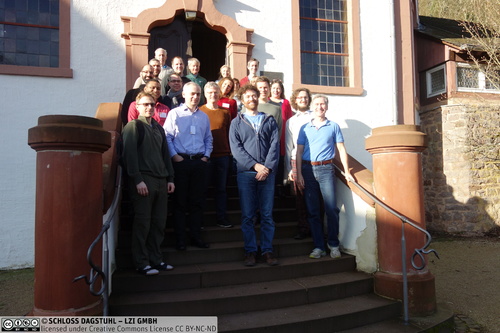
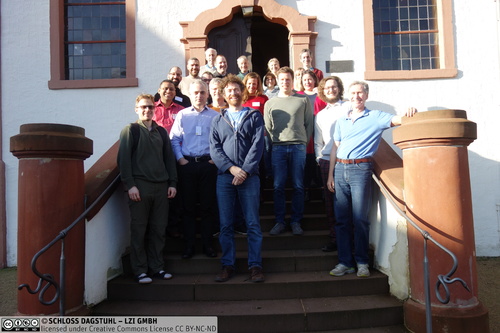
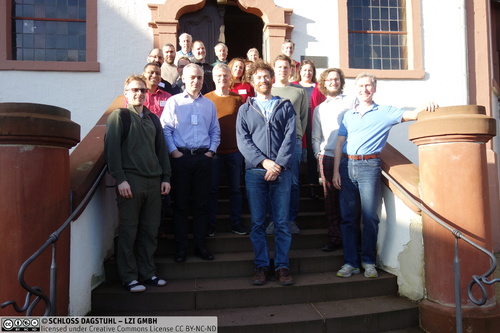
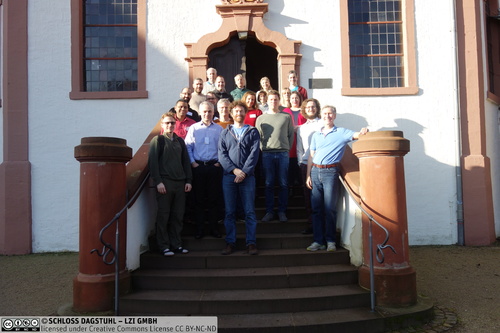
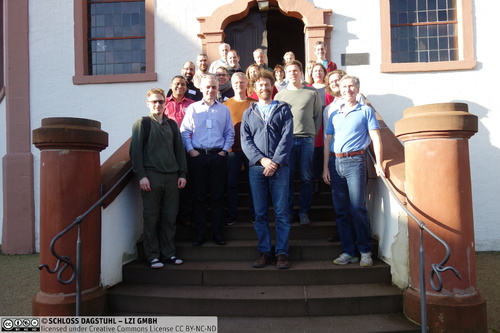
(Click in the middle of the image to enlarge)
Permalink
Please use the following short url to reference this page:
https://www.dagstuhl.de/19512
Organizers
- Thomas A. Grandine (The Boeing Company - Seattle, US)
- Jörg Peters (University of Florida - Gainesville, US)
- Ulrich Reif (TU Darmstadt, DE)
- Olga Sorkine-Hornung (ETH Zürich, CH)
Contact
- Andreas Dolzmann (for scientific matters)
- Annette Beyer (for administrative matters)
Improving algorithms and interfaces for interactive physical simulation serves to train the workforce, to create engaging movies and games, and to include humans in complex decision and optimization processes. Realistic, robust, and trustworthy simulation depends on the subtle interaction of geometric models and physical models, governed by partial differential equations and leveraging tools that range from geometry processing, computational geometry, geometric design, splines in meshing-less and iso-geometry approaches – all the way to real-time computation and interactive force-feedback.
The goal of this Dagstuhl Seminar is to present and contrast this rich set of techniques, and to foster new interaction between academia, industrial and government- sponsored labs in computer science, applied mathematics and engineering in order to chart future directions and formulate new research questions. Challenges to be addressed include: understanding and formulating mathematical models that bridge the divide between geometric modeling and engineering analysis; contrasting differing error categories in different sub-fields and their estimation; developing techniques that enable a faster design-analysis feedback cycle for interactive modeling and virtual prototypes, and that cope with inexact external forces, UI and feedback and interactivity; extending fast model reduction techniques to non-linear models (e.g. of elasticity) and enabling fast updates after substantial state changes; improving the interface between geometry modeling and physics simulation libraries such as Blender, SOFA, bullet, CGAL, and G+smo.
 Creative Commons BY 3.0 DE
 Thomas A. Grandine, Jörg Peters, Ulrich Reif, and Olga Sorkine-Hornung
Dagstuhl Seminar 19512 presented and debated a rich set of techniques for improving algorithms and interfaces for interactive physical simulation, based on geometric and physical models and governed by partial differential equations. The techniques originate in geometry processing, computational geometry, geometric design, and the use of splines in meshing-less and iso-geometry approaches.
Thanks to its diverse roster of participants, with expertise spanning computer science, applied mathematics and engineering, the seminar enabled rare new interactions between academia, industrial and government-sponsored labs and fostered new insights apart from technical considerations. For example, one of the ad hoc discussions centered around the mechanisms and person-to-person considerations that enable transfer of new techniques from academia to industry. Another discussion focused on bridging the divide between geometric modeling and engineering analysis. A third focused on the usage (or lack thereof) of academic open-source libraries. And a fourth elucidated the different error measures that allow or prevent model reduction techniques for non-linear models (e.g. of elasticity) for given applications ranging from animation to product design.
The seminar was well-paced, avoiding densely-packed presentations. An emphasis was placed on time to formulate both specific and long range challenges. The benchmark problem in Section 4 is an example of specific problems that clarify and contrast the competing approaches and objectives and advertised the different strengths and the synergy of the areas: responses that permit two-sided error bounds, responses based on mathematical reformulation, applying advanced computational geometry and new software packages that leverage hierarchical spline software.
Jörg Peters
- Pierre Alliez (INRIA - Valbonne, FR) [dblp]
- Mario Botsch (Universität Bielefeld, DE) [dblp]
- Fehmi Cirak (University of Cambridge, GB) [dblp]
- Carlotta Giannelli (University of Firenze, IT) [dblp]
- Thomas A. Grandine (The Boeing Company - Seattle, US) [dblp]
- Cindy Marie Grimm (Oregon State University - Corvallis, US) [dblp]
- Klaus Hildebrandt (TU Delft, NL) [dblp]
- Alec Jacobson (University of Toronto, CA) [dblp]
- Bert Jüttler (Johannes Kepler Universität Linz, AT) [dblp]
- Ladislav Kavan (University of Utah - Salt Lake City, US) [dblp]
- Adarsh Krishnamurthy (Iowa State University, US) [dblp]
- Angela Kunoth (Universität Köln, DE) [dblp]
- David I. W. Levin (University of Toronto, CA) [dblp]
- Angelos Mantzaflaris (INRIA - Valbonne, FR) [dblp]
- Dominik Mokriš (MTU Aero Engines - München, DE) [dblp]
- Jörg Peters (University of Florida - Gainesville, US) [dblp]
- Francesca Pitolli (Sapienza University of Rome, IT) [dblp]
- Ulrich Reif (TU Darmstadt, DE) [dblp]
- Maria Lucia Sampoli (University of Siena, IT) [dblp]
- Thomas Takacs (Johannes Kepler Universität Linz, AT) [dblp]
- Etienne Vouga (University of Texas - Austin, US) [dblp]
- Chris Wojtan (IST Austria - Klosterneuburg, AT) [dblp]
- Urška Zore (MTU Aero Engines - München, DE) [dblp]
Classification
- computer graphics / computer vision
- modelling / simulation
Keywords
- physical simulation
- open-source toolkits
- design-analysis cycle
- 3D printing
- virtual worlds and interactive training