
Dagstuhl-Seminar 26372
Resilient AI-Driven Software Systems
( 06. Sep – 11. Sep, 2026 )
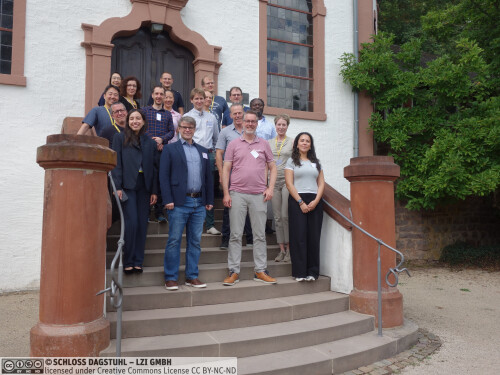
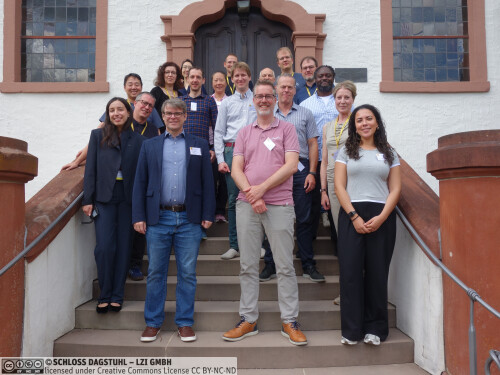
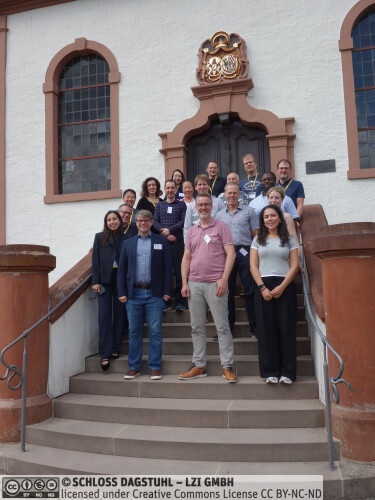
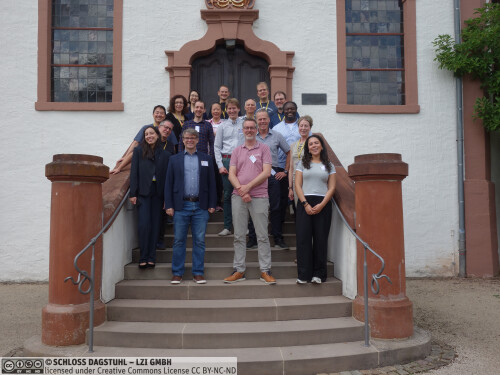
(zum Vergrößern in der Bildmitte klicken)
Permalink
Bitte benutzen Sie folgende Kurz-Url zum Verlinken dieser Seite:
https://www.dagstuhl.de/26372
Organisatoren
- Eric Bodden (Universität Paderborn, DE)
- Christian Kästner (Carnegie Mellon University - Pittsburgh, US)
- Axel-Cyrille Ngonga Ngomo (Universität Paderborn, DE)
- Julia Rubin (University of British Columbia - Vancouver, CA)
Kontakt
- Marsha Kleinbauer (für wissenschaftliche Fragen)
- Christina Schwarz (für administrative Fragen)
Dagstuhl Reports
As part of the mandatory documentation, participants are asked to submit their talk abstracts, working group results, etc. for publication in our series Dagstuhl Reports via the Dagstuhl Reports Submission System.
- Upload (Use personal credentials as created in DOOR to log in)
Gemeinsame Dokumente
- Dagstuhl Materials Page (Use personal credentials as created in DOOR to log in)
Programm
- Upload (Use personal credentials as created in DOOR to log in)
This seminar addresses the urgent and underexplored challenge of resilience in AI driven software systems – the ability of such systems to maintain or restore acceptable service levels under unexpected events, environmental shifts, and malicious threats. While societal awareness and regulatory frameworks (e.g., AI Act, GDPR, Cybersecurity Act) highlight the importance of resilience, the research landscape remains fragmented across machine learning (ML), software engineering (SE), and security. This Dagstuhl Seminar aims to bridge this gap by fostering a holistic, multidisciplinary dialogue on how resilience can be guaranteed by design.
The seminar’s novelty lies in its integrated perspective, uniting AI and SE experts to tackle resilience systematically. Three main questions will guide the discussions:
- What is resilience and how can it be assessed? We aim to move beyond narrow definitions (robustness, input sanitization) toward a comprehensive conceptual foundation that applies equally to algorithms and systems.
- How can AI algorithms be designed to be resilient? The seminar participants will identify fundamental limitations of current ML approaches, and explore new ways to evaluate and enhance model resilience.
- How can AI-driven software systems be engineered to be resilient by design? We will propose lifecycle touchpoints (e.g., in MLOps, SecDevOps) and blueprint development processes that embed resilience systematically.
Answering these questions promises multi-faceted impact:
- Scientific significance: No prior initiative has systematically combined ML foundations with SE methodologies to define, measure, and operationalize resilience.
- Practical relevance: Outputs such as benchmarks, case studies (e.g., AI code generation, self-driving perception), and guidelines will directly inform industry practices and future regulation.
- Societal impact: Failures of self-driving cars, chatbots, and large language models illustrate the real-world dangers of non-resilient AI. Ensuring resilience will mitigate risks of harm, misuse, and security breaches.
We target the following main outcomes:
- A unified definition of resilience across disciplines.
- Benchmarks and use cases to evaluate resilience comprehensively.
- A blueprint for resilient AI system development lifecycles.
- Foundations for joint publications, collaborations, and funding proposals.
 Creative Commons BY 4.0
 Axel-Cyrille Ngonga Ngomo, Eric Bodden, Christian Kästner, and Julia Rubin
This seminar qualifies for Dagstuhl's LZI Junior Researchers program. Schloss Dagstuhl wishes to enable the participation of junior scientists with a specialisation fitting for this Dagstuhl Seminar, even if they are not on the radar of the organizers. Applications by outstanding junior scientists are possible until Friday, December 12, 2025.
Please log in to DOOR to see more details.
- Eric Bodden (Universität Paderborn, DE) [dblp]
- Jan Bosch (Chalmers University of Technology - Göteborg, SE) [dblp]
- Jérôme Euzenat (INRIA - Grenoble, FR) [dblp]
- Jin Guo (McGill University - Montréal, CA) [dblp]
- Carol Hanna (University College London, GB) [dblp]
- Helena Holmström Olsson (Malmö University, SE) [dblp]
- Eunsuk Kang (Carnegie Mellon University - Pittsburgh, US) [dblp]
- Christian Kästner (Carnegie Mellon University - Pittsburgh, US) [dblp]
- Wei Le (Iowa State University - Ames, US) [dblp]
- Marius Lindauer (Leibniz Universität Hannover, DE) [dblp]
- Claudia Mamede (Carnegie Mellon University - Pittsburgh, US) [dblp]
- Giuseppe Marra (KU Leuven, BE) [dblp]
- Axel-Cyrille Ngonga Ngomo (Universität Paderborn, DE) [dblp]
- Christopher J. Parnin (North Carolina State University - Raleigh, US) [dblp]
- Vaidehi Patil (University of North Carolina at Chapel Hill, US) [dblp]
- Axel Polleres (Wirtschaftsuniversität Wien, AT) [dblp]
- Julia Rubin (University of British Columbia - Vancouver, CA) [dblp]
- Norbert Siegmund (Universität Leipzig, DE) [dblp]
- Stefan Wagner (TU München - Heilbronn, DE) [dblp]
Klassifikation
- Artificial Intelligence
- Software Engineering
Schlagworte
- Software Engineering
- Resilience
- Robustness
- Artificial Intelligence