
Dagstuhl-Seminar 26312
Explainable AI in Energy and Critical Infrastructure Systems
( 26. Jul – 29. Jul, 2026 )
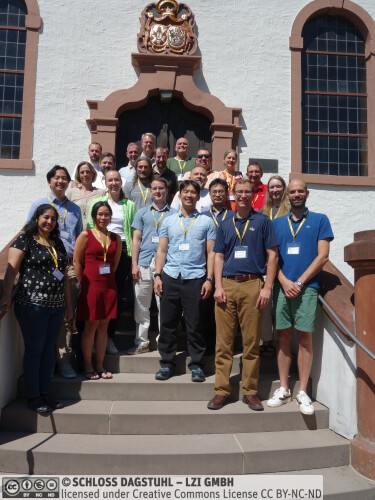
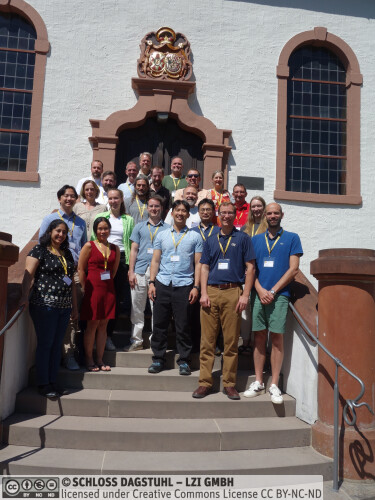
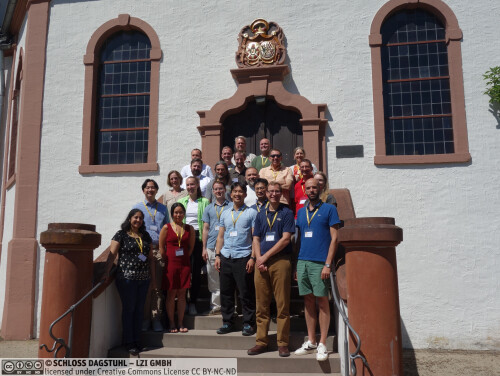
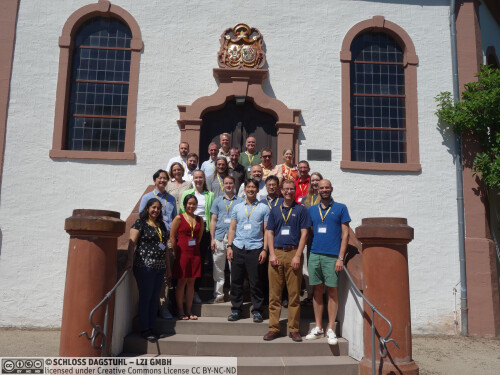
(zum Vergrößern in der Bildmitte klicken)
Permalink
Bitte benutzen Sie folgende Kurz-Url zum Verlinken dieser Seite:
https://www.dagstuhl.de/26312
Organisatoren
- André Artelt (Universität Bielefeld, DE)
- Kyri Baker (University of Colorado - Boulder, US)
- Barbara Hammer (Universität Bielefeld, DE)
- Francesco Leofante (Imperial College London, GB)
Kontakt
- Andreas Dolzmann (für wissenschaftliche Fragen)
- Christina Schwarz (für administrative Fragen)
Dagstuhl Reports
As part of the mandatory documentation, participants are asked to submit their talk abstracts, working group results, etc. for publication in our series Dagstuhl Reports via the Dagstuhl Reports Submission System.
- Upload (Use personal credentials as created in DOOR to log in)
Gemeinsame Dokumente
- Dagstuhl Materials Page (Use personal credentials as created in DOOR to log in)
Energy and critical infrastructure systems, such as power grids, water networks, and transportation networks, are the backbones of modern societies. The operation and decision-making in such systems is challenging due to limited and incomplete information, uncertainties, and longtime horizons. In this context, Artificial Intelligence (AI) holds significant potential to enhance and support the decision-making and operation of energy and critical infrastructure systems. However, given the high-stakes nature of such systems, legal regulations such as the recent European AI Act require transparency that “allows appropriate traceability and explainability” of AI systems deployed in this context. The field of explainable AI (XAI) aims to achieve transparency by explaining the internal reasoning of AI systems in a human-understandable way. It therefore offers promising, yet unexplored, solutions to satisfy those legal requirements and foster the development of supportive AI that is not only efficient but also transparent.
This Dagstuhl Seminar aims to better understand the potential and technical requirements of XAI in such systems and identify research gaps and challenges that currently prevent the use of (X)AI in energy and critical infrastructure systems. In particular, it will focus on major challenges, such as including domain knowledge about the underlying system dynamics, dealing with different time horizons and uncertainties, as well as evaluation strategies and benchmarks.
The seminar will consist of a mixture of presentations introducing relevant subtopics, such as application areas, their unique requirements and needs, as well as an overview talk on XAI to ensure a common terminology and understanding of core concepts and existing XAI methods. Fostering synergizing effects, a special focus will be on discussions in smaller and larger groups, brainstorming where and how XAI can provide benefits, as well as identification of limitations and key requirements that have to be addressed by the community. These are intended to help shape a manifesto paper, which is planned to be drafted in collaboration with all interested participants, outlining priorities and research questions across key stakeholders.
 Creative Commons BY 4.0
 André Artelt, Kyri Baker, Barbara Hammer, and Francesco Leofante
This seminar qualifies for Dagstuhl's LZI Junior Researchers program. Schloss Dagstuhl wishes to enable the participation of junior scientists with a specialisation fitting for this Dagstuhl Seminar, even if they are not on the radar of the organizers. Applications by outstanding junior scientists are possible until December 12, 2025.
Please log in to DOOR to see more details.
- André Artelt (Universität Bielefeld, DE) [dblp]
- Kyri Baker (University of Colorado - Boulder, US) [dblp]
- Minghua Chen (The Chinese University of Hong Kong - Shenzhen, CN) [dblp]
- Priya L. Donti (MIT - Cambridge, US) [dblp]
- Demetrios Eliades (University of Cyprus - Nicosia, CY) [dblp]
- Olivier Francon (Cognizant - San Francisco, US) [dblp]
- Barbara Hammer (Universität Bielefeld, DE) [dblp]
- Einar Broch Johnsen (University of Oslo, NO) [dblp]
- Francesco Leofante (Imperial College London, GB) [dblp]
- Yigal Levin (Ministry of Infrastructure & Water Management - Delft, NL)
- Nicole Ludwig (Universität Augsburg, DE) [dblp]
- Emiliano Massi (Backwell Tech - Berlin, DE)
- Christopher Metz (Rosenxt - Wietmarschen-Lohne, DE) [dblp]
- Daniel Molzahn (Georgia Institute of Technology - Atlanta, US) [dblp]
- Penelope Mück (KROHNE Messtechnik - Duisburg, DE) [dblp]
- Pamela Ong (E.ON - Essen, DE)
- Jacek Pawlak (Imperial College London, GB) [dblp]
- Marios Polycarpou (University of Cyprus - Nicosia, CY) [dblp]
- Gustavo Sánchez (KIT - Karlsruher Institut für Technologie, DE) [dblp]
- Jonathan Thurlwell (Ofgem - London, GB)
- Calvin Tsay (Imperial College London, GB) [dblp]
- Verena Wolf (Universität des Saarlandes - Saarbrücken, DE) [dblp]
- Daniel Young (University of Texas - Austin, US) [dblp]
Klassifikation
- Artificial Intelligence
- Machine Learning
- Systems and Control
Schlagworte
- Energy
- Critical Infrastructure
- Explainable AI
- Machine Learning