
Dagstuhl-Seminar 26172
Exertion and Fatigue in Body-Based Interactive Systems
( 19. Apr – 22. Apr, 2026 )
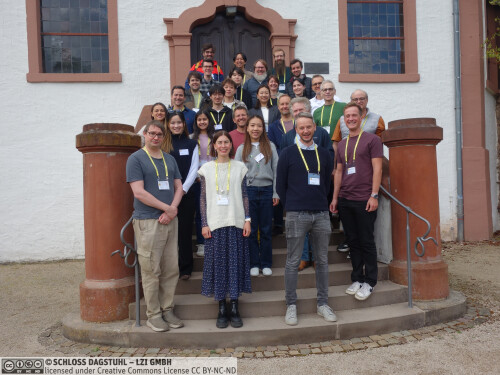
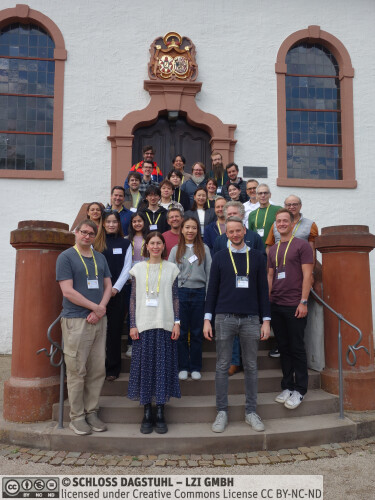


(zum Vergrößern in der Bildmitte klicken)
Permalink
Bitte benutzen Sie folgende Kurz-Url zum Verlinken dieser Seite:
https://www.dagstuhl.de/26172
Organisatoren
- Joanna Bergström (University of Copenhagen, DK)
- Jarrod Knibbe (University of Queensland - Brisbane, AU)
- Per Ola Kristensson (University of Cambridge, GB)
- Benjamin Tag (University of New South Wales – Sydney, AU)
Kontakt
- Marsha Kleinbauer (für wissenschaftliche Fragen)
- Christina Schwarz (für administrative Fragen)
Gemeinsame Dokumente
- Dagstuhl Materials Page (Use personal credentials as created in DOOR to log in)
When designing and evaluating new interactive systems, we are quick to discourage and reject new technical opportunities that would cause fatigue. This is especially constraining as we design evermore body-based devices and experiences, where, initially, users' arms can feel heavy and sensations of fatigue be more acute. We argue that our simplistic view and avoidance of fatigue discredits opportunities around adaptation, training, optimisation, and the resilience built through expertise and repeated use.
Despite advances in wearable and physiological sensing and modelling, there is still much room for developing a more nuanced view of fatigue. From its effects on low-level action-perception loops, through to impacts on decision-making in social-technical systems, to modelling and predicting its onset, development and experiential properties, significant work remains for the Human-Computer Interaction (HCI) community and beyond.
This Dagstuhl Seminar aims to explore the role of fatigue in body-based interactions, bringing together experts from HCI, biomechanics, ergonomics, and cognitive psychology. The goal is to shift the perception of fatigue from a limitation to an essential aspect of interaction design. Through interdisciplinary collaboration, we aim to develop models and insights that better understand and mitigate fatigue, ensuring adaptive and sustainable design strategies that prioritise user well-being and long-term engagement.
Seminar participants will collaborate with industry and academic experts to explore how technologies like exoskeletons, wearables, and motion-based interfaces impact users' physical and cognitive states. The seminar will lay the foundation for future research in fatigue-aware interaction design. Through this seminar, we aim to establish a shared understanding of the challenges and opportunities in fatigue monitoring, develop guidelines for effective interventions, and examine the ethical considerations of using such systems in daily life. Ultimately, the seminar seeks to advance the field of fatigue detection and management, ensuring that future technologies are not only immersive but also sustainable and inclusive.
 Creative Commons BY 4.0
 Joanna Bergström, Jarrod Knibbe, Per Ola Kristensson, and Benjamin Tag
Please log in to DOOR to see more details.
- João Belo (Universität des Saarlandes - Saarbrücken, DE) [dblp]
- Joanna Bergström (University of Copenhagen, DK) [dblp]
- Maxime Cordeil (University of Queensland - Brisbane, AU) [dblp]
- Barrett Ens (University of British Columbia - Vancouver, CA) [dblp]
- Tiare Feuchtner (Universität Konstanz, DE) [dblp]
- Florian Fischer (University of Cambridge, GB) [dblp]
- Jinghui Hu (Lancaster University, GB) [dblp]
- Sebastian Hubenschmid (Aarhus University, DK) [dblp]
- Pourang P. Irani (University of British Columbia - Vancouver, CA) [dblp]
- Seungwoo Je (SUSTech - Shenzen, CN) [dblp]
- Nikhita Joshi (University Paris-Saclay - Orsay, FR) [dblp]
- Jarrod Knibbe (University of Queensland - Brisbane, AU) [dblp]
- Per Ola Kristensson (University of Cambridge, GB) [dblp]
- Katja Krug (TU Dresden, DE) [dblp]
- Yi Li (TU Wien, AT) [dblp]
- Azumi Maekawa (University of Tokyo, JP) [dblp]
- Florian Michahelles (TU Wien, AT) [dblp]
- Maria Fernanda Montoya Vega (Monash University - Clayton, AU) [dblp]
- Florian 'Floyd' Mueller (Monash University - Clayton, AU) [dblp]
- Antti Oulasvirta (Aalto University, FI) [dblp]
- Benjamin Tag (University of New South Wales – Sydney, AU) [dblp]
- Eduardo Velloso (The University of Sydney, AU) [dblp]
- Daniel Vogel (University of Waterloo, CA) [dblp]
- Guy Wallis (The University of Queensland - St Lucia, AU) [dblp]
- Cleo Xiao (University of Copenhagen, DK) [dblp]
- Difeng Yu (University of Copenhagen, DK) [dblp]
- André Zenner (Universität des Saarlandes, DE) [dblp]
- Jian Zhang (The University of Melbourne, AU) [dblp]
Klassifikation
- Emerging Technologies
- Human-Computer Interaction
Schlagworte
- Fatigue
- Exertion
- Interaction Design
- Computational Interaction
- User Experience