
Dagstuhl-Seminar 26062
Connected Space: Challenges and Opportunities in Satellite Computing and Networking
( 01. Feb – 04. Feb, 2026 )
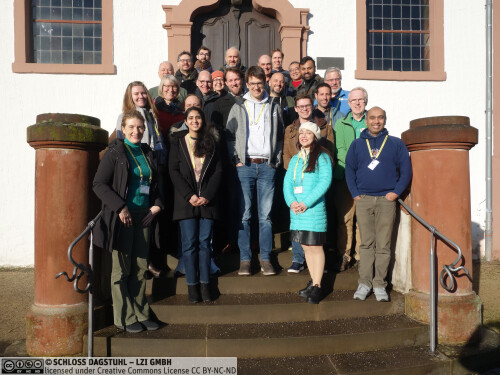


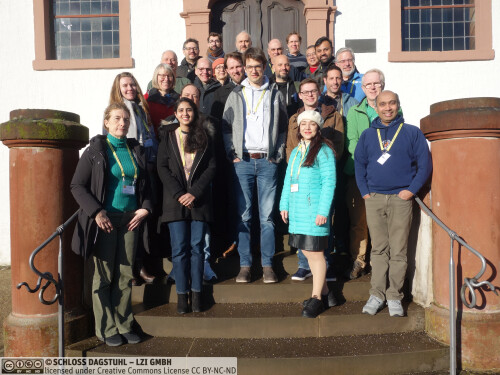
(zum Vergrößern in der Bildmitte klicken)
Permalink
Bitte benutzen Sie folgende Kurz-Url zum Verlinken dieser Seite:
https://www.dagstuhl.de/26062
Organisatoren
- Tusher Chakraborty (Microsoft Research - Redmond, US)
- Brandon M. Lucia (Carnegie Mellon University - Pittsburgh, US)
- Paulo M. Mendes (Airbus - Taufkirchen, DE)
- Nitinder Mohan (TU Delft, NL)
- Nishanth Sastry (University of Surrey - Guildford, GB)
Kontakt
- Andreas Dolzmann (für wissenschaftliche Fragen)
- Jutka Gasiorowski (für administrative Fragen)
Gemeinsame Dokumente
- Dagstuhl Materials Page (Use personal credentials as created in DOOR to log in)
Programm
Recent advancements in satellite technology have propelled space-based networking and computing into the forefront of next-generation connectivity and computation paradigms. The growing deployment of LEO constellations by companies such as SpaceX, OneWeb, and Amazon has enabled global broadband coverage, supporting applications such as emergency communications, remote connectivity, and IoT services. Simultaneously, satellites with computational capabilities present new possibilities for in-orbit data processing, hyperspectral imaging, and AI-driven applications. However, despite these technological advances, significant challenges remain in integrating satellite networks with terrestrial infrastructure, ensuring interoperability across different providers, and addressing sustainability concerns.
This Dagstuhl Seminar will bring key stakeholders from academia, industry, and regulatory bodies to explore pressing challenges and opportunities in satellite networking and computing. During the seminar, we aim to facilitate discussions on space networking architectural design, protocols and enabling solutions, regulatory and standardization efforts, emerging use cases, and collaborative community efforts (e.g. testbeds, research working groups, etc.). The seminar will provide a structured roadmap for future research and collaboration in this evolving domain. We welcome participants for discussion and provide their perspectives on the following topics:
- Space Networking Platforms: Addressing challenges in harmonizing satellite and terrestrial networks, including multi-orbit connectivity, edge networking in space, and cross-layer optimization. Discussions will explore architectures that ensure seamless interoperability in space across satellite and terrestrial network operators.
- Space Computing: Exploring the computational capabilities of satellites for onboard data processing, AI-driven applications, and inter-satellite computing. Topics include hardware constraints, power efficiency, remote debugging, and AI model deployment on space platforms.
- Accessibility, Sustainability and Security: Examining the need for standardized communication protocols, peering agreements, environmental impact of satellite deployments and security challenges against cyber threats for continued operations.
- Application Usecases for Space Networks: Investigating novel applications leveraging satellite networks, including earth observation, disaster response, precision agriculture, 5G/6G (direct to cell), and content delivery. Discussions will focus on optimizing satellite network architectures to support these emerging use cases, as well as the correspondent business models.
 Creative Commons BY 4.0
 Tusher Chakraborty, Brandon M. Lucia, Paulo M. Mendes, Nitinder Mohan, and Nishanth Sastry
Please log in to DOOR to see more details.
Vor Ort
- Antonios Atlasis (ESA / ESTEC - Noordwijk, NL)
- Marc Blanchet (Viagenie - Québec, CA) [dblp]
- Anna Brunstrom (Karlstad University, SE) [dblp]
- Dan Crichton (Jet Propulsion Laboratory - Pasadena, US) [dblp]
- Tomaso de Cola (DLR - Oberpfaffenhofen, DE) [dblp]
- Bradley Denby (Virginia Polytechnic Institute - Blacksburg, US) [dblp]
- Gorry Fairhurst (University of Aberdeen, GB) [dblp]
- Juan A. Fraire (INRIA/INSA - Lyon, FR) [dblp]
- Holger Hermanns (Universität des Saarlandes - Saarbrücken, DE) [dblp]
- Mike Hicks (Cisco - Perth, AU)
- Liz Izhikevich (UCLA - San Diego, US) [dblp]
- Gunes Karabulut Kurt (Polytechnique Montréal, CA) [dblp]
- Bertrand Le Saux (AI4Earth - Luxembourg, LU) [dblp]
- Tarsicio López Delgado (Open Cosmos - Harwell, GB)
- Paulo M. Mendes (Airbus - Taufkirchen, DE) [dblp]
- Nitinder Mohan (TU Delft, NL) [dblp]
- Jörg Ott (TU München - Garching, DE) [dblp]
- Jianping Pan (University of Victoria, CA) [dblp]
- Ana Pérez-Neira (CTTC - Castelldefels, ES) [dblp]
- Sofie Pollin (KU Leuven, BE) [dblp]
- Rudolf Saathof (TU Delft, NL) [dblp]
- Nishanth Sastry (University of Surrey - Guildford, GB) [dblp]
- Andreas Schmidt (Universität des Saarlandes - Saarbrücken, DE) [dblp]
- Tanya Shreedhar (TU Delft, NL) [dblp]
- Elif Uysal (Middle East Technical University - Ankara, TR) [dblp]
- Dan York (Internet Society - Reston, US) [dblp]
Klassifikation
- Emerging Technologies
- Networking and Internet Architecture
- Other Computer Science
Schlagworte
- Satellite networking
- Non-Terrestrial Communications
- Space computing
- Space regulations
- New Space Agenda