
Dagstuhl-Seminar 25422
Cognitive Sensing and Interaction
( 12. Oct – 15. Oct, 2025 )
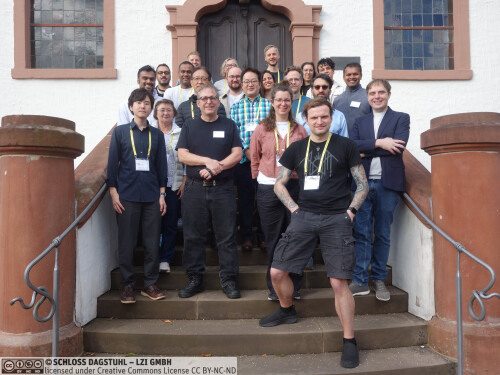
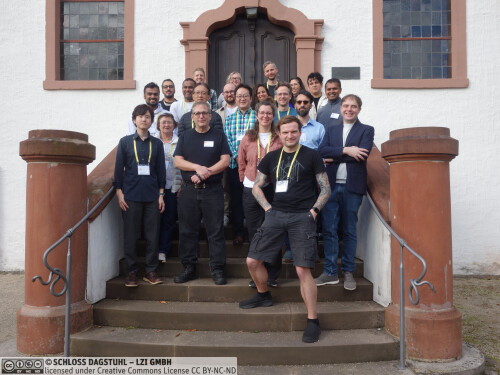
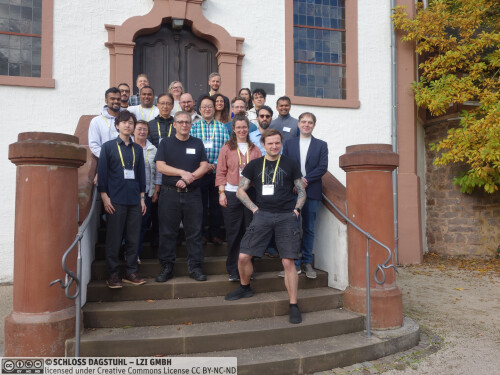
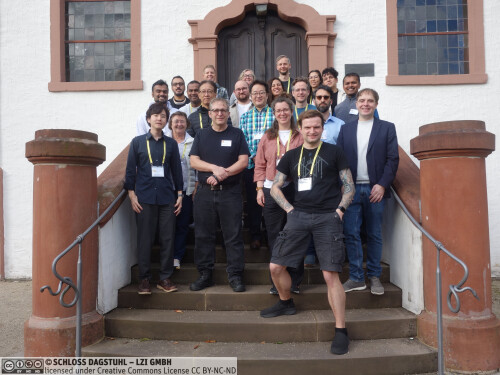
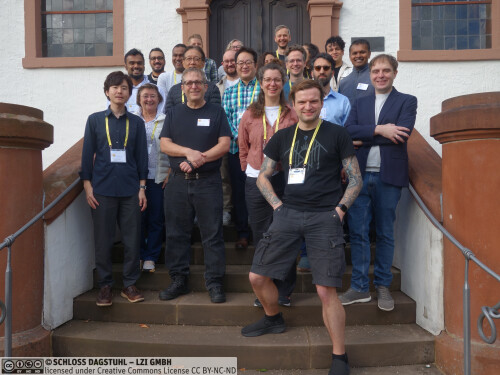
(zum Vergrößern in der Bildmitte klicken)
Permalink
Bitte benutzen Sie folgende Kurz-Url zum Verlinken dieser Seite:
https://www.dagstuhl.de/25422
Organisatoren
- Thomas Kosch (HU Berlin, DE)
- Kai Kunze (Keio University - Yokohama, JP)
- Christina Schneegass (TU Delft, NL)
- Thad Starner (Georgia Institute of Technology - Atlanta, US)
Kontakt
- Michael Gerke (für wissenschaftliche Fragen)
- Susanne Bach-Bernhard (für administrative Fragen)
Gemeinsame Dokumente
- Dagstuhl Materials Page (Use personal credentials as created in DOOR to log in)
In Human-Computer Interaction (HCI), cognitive sensing offers valuable insights into the relationship between users and technologies, enabling new forms of interaction. Monitoring human cognitive processes, such as attention, memory, and decision-making, enables technologies to adapt to user needs, provide personalized support, and develop new methods for measuring user experience. Such data streams allow for seamless communication between humans and computing systems. With recent advances in Artificial Intelligence (AI), we observe significant improvement in one of the major hurdles in cognitive interaction – the precise and reliable classification of cognitive states. However, critical challenges remain before cognitive interaction can be effectively used in real-world environments. This Dagstuhl Seminar “Cognitive Sensing and Interaction” (25422) focused on three of those challenges, namely (a) robust cognitive sensing in everyday life, (b) how to augment human cognitive abilities efficiently, (c) how to design ethical, inclusive, reproducible systems for a diverse population. The goals of this seminar was to identify successful practices, develop a research agenda, and initiate the development of policy documents for designing user-centric technologies that perceive, communicate with, and engage with user cognition. We brought together experts in HCI, neuroscience, AI, and psychology to synthesize solutions for overcoming challenges and discuss ways to integrate cognitive sensing and interaction into our everyday lives.
This Dagstuhl Seminar, “Cognitive Sensing and Interaction” (25422), examined how cognitive sensing can transition from lab prototypes to everyday systems that use cognitive interaction. The overarching goal was to discuss the technical feasibility, identify interaction concepts worth pursuing, and determine the necessary governance as sensing technologies mature. The seminar consisted of two keynotes and three days of structured work. The keynotes discussed public-facing use scenarios for personal brain scanners (schools, neurodiversity support, aging) and the move from basic monitoring toward low-power, on-device intelligence enabled by neuromorphic computing. Day 1 mapped sensing modalities and devices to feasibility, including usefulness trade-offs and consolidated metrics, as well as best practices for in-the-wild inference, with an emphasis on multimodal, context-aware interpretation and individualized baselines. Day 2 translated visions into concrete interaction scenarios through rapid prototyping and walk-and-talk ideation, exposing constraints around signal quality, calibration, latency, and how to communicate uncertainty. Day 3 synthesized technical, societal, and legal risks into actionable policy directions and stakeholder responsibilities. The seminar outcomes include an initial framework connecting signals to cognitive constructs and interaction mechanisms, a portfolio of grounded scenarios and design tensions, and a governance agenda centered on transparency, user control, minimal retention, and accountable evaluation beyond accuracy.
 Creative Commons BY 4.0
 Thomas Kosch, Kai Kunze, Christina Schneegass, and Thad Starner
Cognitive sensing offers valuable insights into how users interact with technologies and enables innovative interaction methods. By monitoring human cognitive processes such as attention, memory, expectations, and decision-making, technologies can adapt to user needs, provide personalized support, and introduce new metrics for user experience. Such cognitive data streams facilitate seamless communication between humans and computing systems. Advancements in Artificial Intelligence (AI) have notably improved the accurate and reliable classification of cognitive states, addressing one of the primary challenges in cognitive interaction. However, significant hurdles remain before cognitive interaction can be effectively implemented in real-world environments. This Dagstuhl Seminar will address three key challenges: (a) achieving robust cognitive sensing in everyday life, (b) efficiently augmenting human cognitive abilities, and (c) designing ethical, inclusive, and reproducible end-user systems for the general population. The seminar aims to identify best practices, develop a research agenda, and formulate policies to design user-centric technologies that perceive, communicate with, and engage user cognition. We plan to convene experts in HCI, neuroscience, AI, and psychology to develop solutions for these challenges and discuss how to integrate cognitive sensing and interaction into daily life.
This seminar aims to bring together specialists and experts in HCI, machine perception, psychology, neuroscience, and AI to investigate the possibilities of digitally sensing, interacting, and enhancing user cognition. The seminar will tackle the following research questions.
- Robust Interaction: How do we design robust cognitive interaction in and for everyday settings?
- Cognitive Augmentation: How can we augment and interact with user cognition while avoiding replacing innate skills with technology?
- Inclusivity, Diversity, and Reproducibility: How do we ensure inclusivity and diversity during cognitive interaction while accounting for individual cognitive diversity and improving the reproducibility of research results?
The goal of Robust Interaction is to design robust cognitive interaction technologies for everyday settings by understanding their current use and ensuring they are feasible for the general population. This involves addressing new challenges and risks, such as the influence of multimodal stimuli on physiological and behavioral measures, and considering the personal reasons users deploy these technologies. Cognitive Augmentation is concerned with enhancing and interacting with user cognition without replacing innate skills with technology. This involves leveraging recent research showing that augmentation interfaces can create placebo effects similar to medication, positively impacting users' subjective performance by making them believe the system provides adaptive support based on their workload and stress levels. Finally, Inclusivity, Diversity, and Reproducibility deals with inclusivity and diversity in cognitive interaction by considering individual cognitive differences and improving the reproducibility of research results. This involves addressing the complexity and variability of cognitive data to prevent negative effects on users and calls for more research and regulation as neurotechnologies become more widely available in the consumer market.
Over three days, our seminar participant will engage with the abovementioned problems to synthesize insights, derive a research agenda, and outline necessary policy documents for systems and technologies dealing with cognitive data to ensure robust, reasonable, and inclusive interaction.
Thomas Kosch, Christina Schneegass, Kai Kunze, and Thad Starner
Please log in to DOOR to see more details.
- Esther Bosch (DLR - Braunschweig, DE) [dblp]
- Anna Cox (University College London, GB) [dblp]
- Passant Elagroudy (DFKI GmbH - Kaiserslautern, DE) [dblp]
- Mustafa Hamada (Mendi Innovations - Stockholm, SE)
- Masahiko Inami (University of Tokyo, JP) [dblp]
- Shoya Ishimaru (Osaka Metropolitan University, JP) [dblp]
- Michael Knierim (KIT - Karlsruher Institut für Technologie, DE) [dblp]
- Hideki Koike (Institute of Science Tokyo, JP) [dblp]
- Thomas Kosch (HU Berlin, DE) [dblp]
- Kai Kunze (Keio University - Yokohama, JP) [dblp]
- Diako Mardanbegi (American University of Beirut, LB) [dblp]
- Suranga Nanayakkara (National University of Singapore, SG) [dblp]
- Jasmin Niess (University of Oslo, NO) [dblp]
- Evangelos Niforatos (TU Delft, NL) [dblp]
- Prasanth Sasikumar (National University of Singapore, SG) [dblp]
- Christina Schneegass (TU Delft, NL) [dblp]
- Tanja Schultz (Universität Bremen, DE) [dblp]
- Thad Starner (Georgia Institute of Technology - Atlanta, US) [dblp]
- Benjamin Tag (UNSW - Sydney, AU) [dblp]
- Steeven Villa (LMU München, DE) [dblp]
- Robin Welsch (Aalto University, FI) [dblp]
- Max L. Wilson (University of Nottingham, GB) [dblp]
- Anusha Withana (The University of Sydney, AU) [dblp]
Klassifikation
- Artificial Intelligence
- Computers and Society
- Human-Computer Interaction
Schlagworte
- Cognitive Interaction
- Cognition-Awareness
- Cognitive Augmentation
- Physiological Interaction
- Wearable Technology