
Dagstuhl-Seminar 25301
Linguistics and Language Models: What Can They Learn from Each Other?
( 20. Jul – 25. Jul, 2025 )
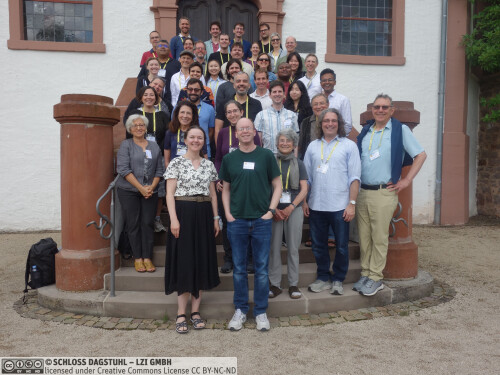
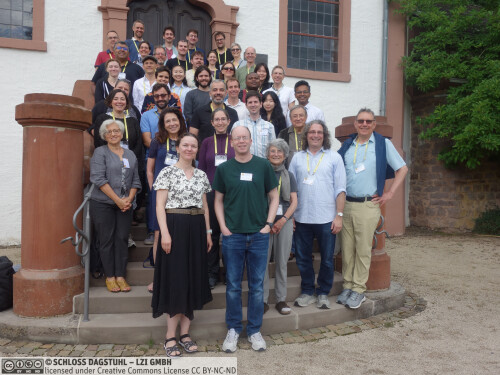
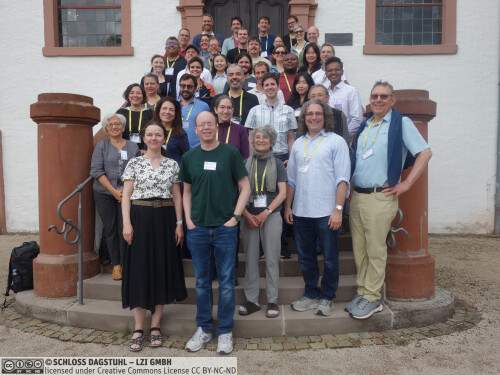
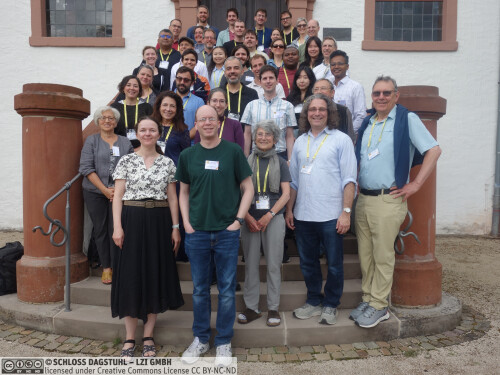
(zum Vergrößern in der Bildmitte klicken)
Permalink
Bitte benutzen Sie folgende Kurz-Url zum Verlinken dieser Seite:
https://www.dagstuhl.de/25301
Organisatoren
- Anna Rogers (IT University of Copenhagen, DK)
- Nathan Schneider (Georgetown University - Washington, DC, US)
- Bonnie Webber (University of Edinburgh, GB)
Kontakt
- Michael Gerke (für wissenschaftliche Fragen)
- Christina Schwarz (für administrative Fragen)
Programm
Since the release of ChatGPT, language models (LMs) have stirred concerns in government, over the possibility that citizens will come to believe the textual and spoken output of such models. Similarly, they have caused panic in education, forcing a rethink of what students are learning and how to assess it. Of concern to us here, is whether LMs mean the end of computational and/or cognitive models of human language learning and language use. Does the practical success of LMs mean that computational linguistics (and perhaps even linguistics itself) is no longer relevant? Or are we missing problems with LMs that computational linguistics (and linguistics more generally) could help us both recognize and surmount?
To have any hope of answering big questions about this technology, we need to foster interdisciplinary conversations and collaborations across the fields of machine learning, NLP, linguistics, and cognitive science. This Dagstuhl Seminar was organized to facilitate such conversations and collaborations among senior experts and rising stars. In particular, the five key questions were raised for discussion:
- What evidence, if any, do LMs provide about human language, world knowledge and/or cognition?
- How can LMs be used as tools for empirical research in linguistics?
- How can linguistics be brought to bear on interpreting the operation of LMs?
- How can linguistically-oriented perspectives enhance or complement LMs for greater reliability and robustness?
- What is the appropriate framing of LM-functionality, for scientists and the public?
An international group of 40 scholars in computational linguistics, natural language processing, and cognitive science was assembled for our week-long seminar. Commensurate with the broad questions raised in the seminar, participants were selected for their wide-ranging expertise on topics such as computational cognitive modeling and psycholinguistics; multilingual modeling and language variation; formal and functional aspects of language use; machine learning; LM interpretability; NLP for low-resource languages; applications and social impacts of language technologies; and philosophical underpinnings of modeling language.
The scientific program consisted of
- Eleven 20-minute talks raising perspectives and questions to inspire further discussion.
- Two rounds of working groups formed dynamically based on participant suggestions. The first set of groups held parallel meetings on Monday/Tuesday, each presenting a synopsis in a plenary session Tuesday evening. The second round of groups took place Wednesday morning and Thursday, reporting back in a Thursday evening plenary session.
- Friday morning was devoted to a plenary discussion of next steps, with about a dozen participants volunteering to organize follow-up initiatives to capitalize on some of the most fruitful conclusions of the working groups.
Abstracts from the talks as well as the working groups are reported below. In true Dagstuhl fashion, the formal scientific program was complemented by opportunities for socialization and recreation in and around the castle – the lively exchange of ideas and perspectives that began in the official sessions continued over meals, coffee breaks, nature hikes, and a sightseeing excursion to Trier.
Finally, a word of thanks from the organizers: We are grateful to all the attendees and the Dagstuhl staff who made the seminar an incredible experience. Special shoutouts go to Christina Schwarz for her administrative leadership; to participants A. Seza Doğruöz and Asad Sayeed, who agreed to serve as collectors for the final report; and to Asad also for his organizational assistance with the Wednesday social outing to Trier.
 Creative Commons BY 4.0
 Nathan Schneider, Anna Rogers, and Bonnie Webber
In a little over a year since the release of ChatGPT, language models (LMs) have stirred concerns in government, over the possibility that citizens will come to believe the textual and spoken output of such models. Similarly, they have caused panic in education, forcing a rethink of what students are learning and how to assess it. Of concern to us here, is whether LMs mean the end of computational and/or cognitive models of human language learning and language use. Does the practical success of LMs mean that computational linguistics (and perhaps even linguistics itself) is no longer relevant? Or are we missing problems with LMs that computational linguistics (and linguistics more generally) could help us both recognize and surmount?
To have any hope of answering big questions about this technology, we need to foster interdisciplinary conversations and collaborations across the fields of machine learning, NLP, linguistics, and cognitive science. This Dagstuhl Seminar aims to facilitate such conversations and collaborations among senior experts and rising stars. In particular, the seminar poses five key questions for discussion:
- What evidence, if any, do LMs provide about human language, world knowledge, and/or cognition?
- How can LMs be used as tools for empirical research in linguistics?
- How can linguistics be brought to bear on interpreting the operation of LMs?
- How can linguistically-oriented perspectives enhance or complement LMs for greater reliability and robustness?
- What is the appropriate framing of LM-functionality, for scientists and the public?
Seminar outcomes could include joint publications that advance scientific and public understanding of language and LMs, setting the agenda for the next generation of research and development in NLP, linguistics, and cognitive science.
Tal Linzen, Anna Rogers, Nathan Schneider, and Bonnie Webber
Vor Ort
- David Adelani (MILA - Montreal, CA)
- Antonios Anastasopoulos (George Mason University - Fairfax, US) [dblp]
- Gašper Beguš (University of California - Berkeley, US) [dblp]
- Verena Blaschke (Ludwig-Maximilians-Universität München, DE)
- Ryan Cotterell (ETH Zürich, CH) [dblp]
- Marie-Catherine de Marneffe (UC Louvain-la-Neuve, BE) [dblp]
- Katherine Demuth (Macquarie University - Sydney, AU)
- A. Seza Dogruöz (Ghent University, BE) [dblp]
- Robert Frank (Yale University, US) [dblp]
- Juan Luis Gastaldi (ETH Zürich, CH) [dblp]
- Adele Goldberg (Princeton University, US) [dblp]
- Coleman Haley (University of Edinburgh, GB)
- Aurelie Herbelot (Denotation - Pritzwalk, DE) [dblp]
- Yu-Yin Hsu (Hong Kong Polytechnic Univ., CN)
- Mark Johnson (Macquarie University - Sydney, AU) [dblp]
- Najoung Kim (Boston University, US) [dblp]
- Lori Levin (Carnegie Mellon University - Pittsburgh, US) [dblp]
- Roger Levy (MIT - Cambridge, US) [dblp]
- Xixian Liao (Barcelona Supercomputing Center, ES)
- Kyle Mahowald (University of Texas - Austin, US) [dblp]
- Tom McCoy (Yale University, US) [dblp]
- Joakim Nivre (Uppsala University, SE) [dblp]
- Alexis M. Palmer (University of Colorado - Boulder, US) [dblp]
- Christopher Potts (Stanford University, US) [dblp]
- Jakob Prange (Universität Augsburg, DE)
- Siva Reddy (MILA - Montreal, CA & McGill University - Montreal, CA) [dblp]
- Philip Resnik (University of Maryland - College Park, US) [dblp]
- Anna Rogers (IT University of Copenhagen, DK) [dblp]
- Rachel Rudinger (University of Maryland - College Park, US) [dblp]
- Gözde Gül Sahin (Koç University - Istanbul, TR) [dblp]
- Asad Sayeed (University of Gothenburg, SE) [dblp]
- Nathan Schneider (Georgetown University - Washington, DC, US) [dblp]
- Noah A. Smith (University of Washington - Seattle, US) [dblp]
- Mark Steedman (University of Edinburgh, GB) [dblp]
- Tiago Torrent (Federal University of Juiz de Fora, BR) [dblp]
- Bonnie Webber (University of Edinburgh, GB) [dblp]
- Ethan Wilcox (Georgetown University - Washington, DC, US)
- Adina Williams (Meta Platforms - New York, US) [dblp]
- Amir Zeldes (Georgetown University - Washington, DC, US) [dblp]
Remote:
- Alessandro Lenci (University of Pisa, IT) [dblp]
Klassifikation
- Computation and Language
Schlagworte
- Linguistic theory
- Cognitive modelling
- Language models