
Dagstuhl-Seminar 25242
Testing Program Analyzers and Verifiers
( 09. Jun – 12. Jun, 2025 )
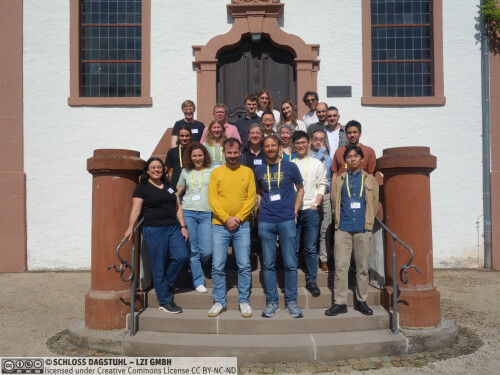
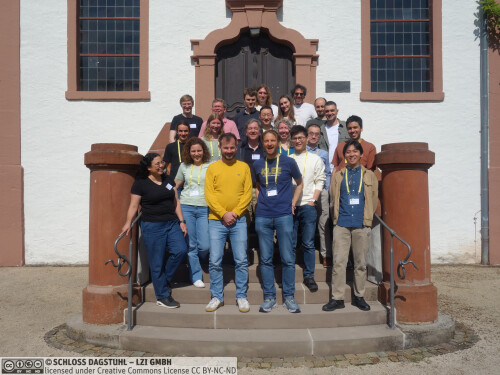
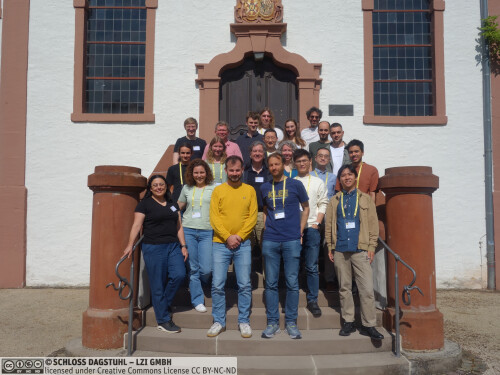
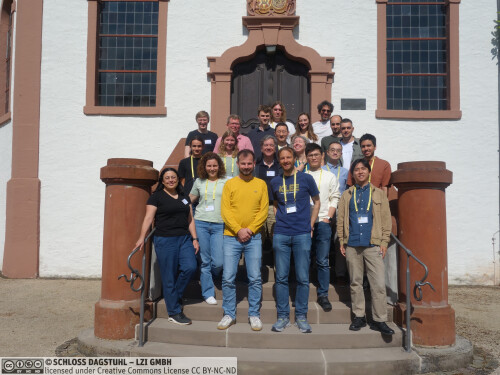
(zum Vergrößern in der Bildmitte klicken)
Permalink
Bitte benutzen Sie folgende Kurz-Url zum Verlinken dieser Seite:
https://www.dagstuhl.de/25242
Organisatoren
- Maria Christakis (TU Wien, AT)
- Alastair F. Donaldson (Imperial College London, GB)
- John Regehr (University of Utah - Salt Lake City, US)
- Thodoris Sotiropoulos (ETH Zürich, CH)
Kontakt
- Michael Gerke (für wissenschaftliche Fragen)
- Simone Schilke (für administrative Fragen)
Programm
In an era where software pervades every facet of modern life, ensuring the correctness of software systems is of paramount importance. Program analyzers and verifiers are integral ingredients of this endeavor. They provide developers with essential tools to identify and prevent potential software faults before they impact production systems and end users. However, just like all software, analyzers and verifiers are not free from faults. Faults in analysis and verification tools can potentially undermine the entire software ecosystem, leading to missed vulnerabilities, wasted development efforts, and more.
The goal of this Dagstuhl Seminar was to (1) identify the challenges associated with the problem of ensuring the reliability of program analyzers and verifiers, (2) discuss potential ways to address these challenges, and (3) connect both practitioners as well as researchers working in this domain. In particular, the seminar aimed to bring together experts in program analysis, verification, automated testing, and formal methods. The discussion focused on three themes:
- Severity of faults within program analysis and verification tools: This involved a detailed examination of how different types of faults can impact various user groups (e.g., end users, software developers) by taking into consideration the context and the intended users of the analysis. For example, we elucidated essential properties required in analyses (e.g., soundness for safety-critical software), while discussing which properties may be less critical.
- {Automated generation of test inputs for analyzers and verifiers: We aimed to thoroughly discuss the challenge of test input generation for finding faults in program analysis and verification, and explored whether existing program generators used in other contexts (e.g., compiler testing) could be potentially applied to validate analyzers/verifiers. For example, program analysis and verification tools are routinely used to detect a huge variety of semantic errors (e.g., buffer overflows, type errors, integer overflows, and many more). A key technical challenge with this is the generation of programs that exhibit interesting semantic errors that are supposedly to be caught by the analyzer/verifier under test.
- Test oracles to validate program analyzers and verifiers: Automatically testing an analyzer or verifier requires a test oracle to determine whether it functions as expected. Given that the majority of program analyzers/verifiers lack a specification and are not standardized, this introduces a significant challenge in determining whether their behavior is correct. The goal was to discuss potential test oracles for different types of faults within program analyzers and verifiers.
The aforementioned discussions were realized through a combination of talks and panel discussions. The seminar began with a brief introduction of the attendees, followed by a keynote by John Regehr outlining the seminar’s goals. Afterwards, 14 participants from both academia and industry presented work related to the seminar’s scope, including novel test oracles for detecting faults in program analyzers and verifiers, testing in emerging domains (e.g., quantum platforms), and new program generation techniques tailored to analyzers.
The seminar schedule was intentionally open and flexible, encouraging attendees to propose discussion topics. Two dedicated discussion panels were held. The first panel focused on whether proactive testing of program analyzers and verifiers is worthwhile. The debate was structured around opposing viewpoints: John Regehr argued in favor of testing analyzers and verifiers, while Alastair Donaldson presented arguments against it.
The second panel covered a broader range of themes, including the significance of faults in analyzers and verifiers, the role of AI in testing, the problem of program generation saturation, and methods for assessing the performance of analyzers and verifiers.
 Creative Commons BY 4.0
 Thodoris Sotiropoulos
In an era where software pervades every facet of modern life, ensuring the correctness of software systems is of paramount importance. Program analyzers and verifiers are integral ingredients of this endeavor. They provide developers with essential tools to identify and prevent potential software faults before they impact production systems and end users. However, just like all software, analyzers and verifiers are not free from faults. Faults in analysis and verification tools can potentially undermine the entire software ecosystem, leading to missed vulnerabilities, wasted development efforts, and more. The goal of this Dagstuhl Seminar is to (1) identify the challenges associated with the problem of ensuring the reliability of program analyzers and verifiers, (2) discuss potential ways to address these challenges, and (3) connect both practitioners as well as researchers working in this domain. In particular, the seminar aims to bring together experts in program analysis, verification, automated testing, and formal methods. The discussion will focus on three themes:
- Severity of faults within program analysis and verification tools: This involves a detailed examination of how different types of faults can impact various user groups (e.g., end users, software developers) by taking into consideration the context and the intended users of the analysis. For example, we plan to elucidate essential properties required in analyses (e.g., soundness for safety-critical software), while discussing which properties may be less critical.
- Automated generation of test inputs for analyzers and verifiers: We aim to thoroughly discuss the challenge of test input generation for finding faults in program analysis and verification, and explore whether existing program generators used in other contexts (e.g., compiler testing) can be potentially applied to validate analyzers/verifiers. For example, program analysis and verification tools are routinely used to detect a huge variety of semantic errors (e.g., buffer overflows, type errors, integer overflows, and many more). A key technical challenge with this is the generation of programs that exhibit interesting semantic errors that are supposedly to be caught by the analyzer/verifier under test.
- Test oracles to validate program analyzers and verifiers: Automatically testing an analyzer or verifier requires a test oracle to determine whether it functions as expected. Given that the majority of program analyzers/verifiers lack a specification and are not standardized, this introduces a significant challenge in determining whether their behavior is correct. The goal is to discuss potential test oracles for different types of faults within program analyzers and verifiers.
Maria Christakis, Alastair F. Donaldson, John Regehr, and Thodoris Sotiropoulos
- Cristian Cadar (Imperial College London, GB) [dblp]
- Maria Christakis (TU Wien, AT) [dblp]
- Pascal Cuoq (TurstInSoft - Paris, FR) [dblp]
- Alastair F. Donaldson (Imperial College London, GB) [dblp]
- Karine Even-Mendoza (King's College London, GB) [dblp]
- Markus Fleischmann (TU Wien, AT) [dblp]
- Amber Gorzynski (Imperial College London, GB)
- Manuel Hermenegildo (IMDEA Software Institute - Pozuelo de Alarcón, ES & UPM - Madrid, ES) [dblp]
- Anastasia Isychev (TU Wien, AT) [dblp]
- David Kaindlstorfer (TU Wien, AT) [dblp]
- Shaohua Li (The Chinese University of Hong Kong, HK)
- Muhammad Numair Mansur (Amazon Web Services - Berlin, DE) [dblp]
- Raphaël Monat (INRIA Lille, FR) [dblp]
- Hakjoo Oh (Korea University - Seoul, KR) [dblp]
- Michael Pradel (Universität Stuttgart, DE) [dblp]
- John Regehr (University of Utah - Salt Lake City, US) [dblp]
- Mate Soos (Ethereum - Berlin, DE) [dblp]
- Thodoris Sotiropoulos (ETH Zürich, CH) [dblp]
- Hao Sun (ETH Zürich, CH) [dblp]
- Caterina Urban (INRIA & ENS Paris, FR) [dblp]
- Valentin Wüstholz (Consensys - Wien, AT) [dblp]
- Chengyu Zhang (Loughborough University, GB) [dblp]
Klassifikation
- Programming Languages
- Software Engineering
Schlagworte
- testing
- formal methods
- verification
- program analysis
- static analysis